Between the winding alleys of Al Shindagha and the shimmering waters of Dubai Creek, stands a quiet yet powerful witness to the city’s past — the Umm Al Rayoul Watchtower. With its square upper chamber and four robust pillars, the structure is far more than stone and mortar; it tells a story of defense, tradition, and the architectural ingenuity of a bygone era.
Located in one of Dubai’s oldest neighborhoods, Umm Al Rayoul is a striking reminder of the city’s early efforts to protect its people and borders. Built in 1939, west of what is now the main municipality building in Bur Deira, the tower was designed for multiple critical roles: surveillance, vehicle inspection, arms storage, and alerting residents to emergencies — whether it was a fire, an outbreak of disease, or the return of the ruler from pilgrimage.
Recently, this landmark was selected by Sheikh Hamdan bin Mohammed bin Rashid Al Maktoum, Crown Prince of Dubai and Chairman of the Executive Council, as part of an initiative to preserve Dubai’s modern heritage sites. The project aims to safeguard architectural and cultural icons that are essential to the emirate’s historical identity.
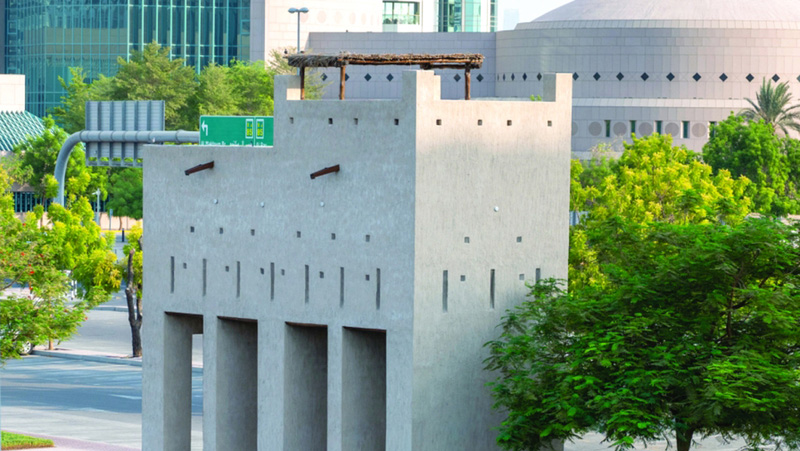
Structurally, the tower is a blend of elegant simplicity and tactical brilliance. Its four thick columns rise nearly 4 meters, forming the backbone of the 9-meter-high structure. The space between them — approximately 15 meters — gives it strength and balance. The square upper room, accessible through a traditional medium-sized door, was designed for 360-degree visibility, allowing guards to monitor any suspicious activity.
But its function extended beyond watchfulness. The tower formed part of an integrated defense network. Inside, it stored supplies and weapons, monitored movement, and even served as a communication hub during crises. In times of war, openings in the floor allowed defenders to fire at enemies hiding below. The tower was so secure that scaling its high walls was nearly impossible.
There was no staircase. Access to the upper room was only possible via a hanging rope, demanding that at least one guard remained inside at all times. Supplies were sent up in woven baskets — known locally as “jafeer” — hoisted by rope from below.
What truly sets Umm Al Rayoul apart is the seamless blend of functionality and traditional aesthetics. From wooden and gypsum detailing to the narrow arrow-slit windows — or “mazaghel” — the tower reflects local architectural beauty while serving practical defensive needs. It is this union of form and function that makes it a true icon of Dubai’s heritage.
Today, as Dubai rapidly modernizes, Umm Al Rayoul stands firm — a physical memory of the city’s resilience, resourcefulness, and the enduring bond between architecture and daily life.