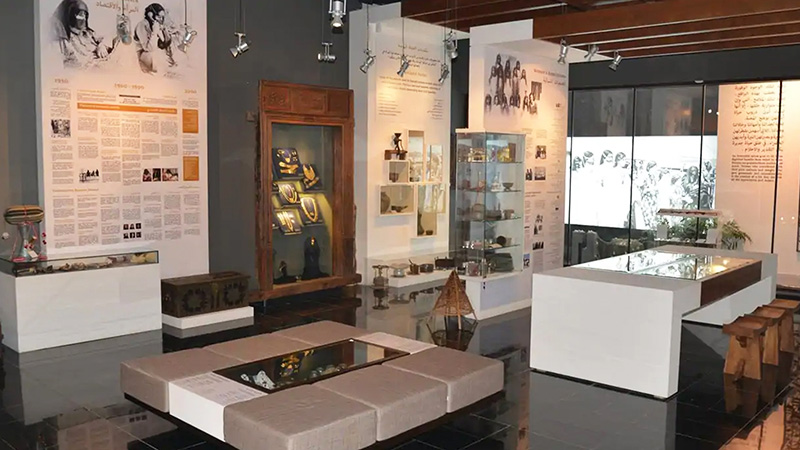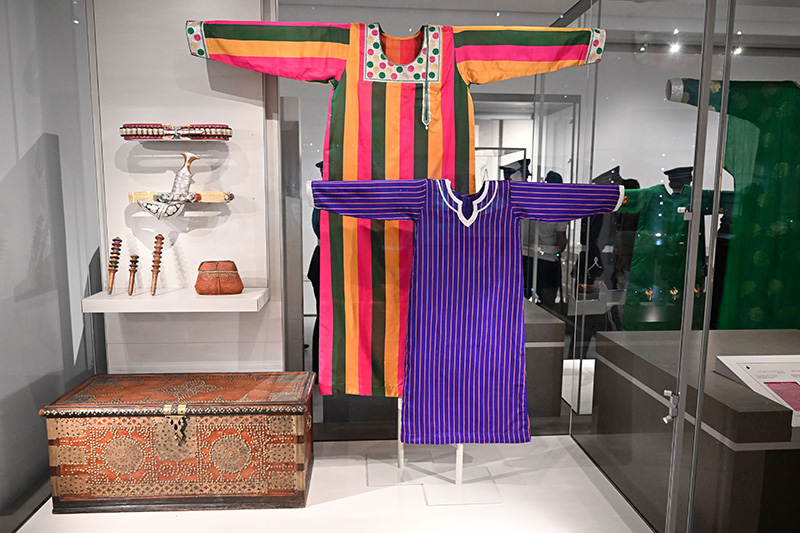
The newly redeveloped Al Ain Museum has officially reopened, unveiling a captivating display of over 1,800 artefacts and historical pieces, some dating back 300,000 years to the Stone Age. This transformation has not only expanded the museum’s physical space but also led to the discovery of significant archaeological sites hidden beneath the museum itself.
Omar Salem Al Kaabi, Director of Al Ain Museum, revealed that the redevelopment and rehabilitation efforts uncovered important underground remains, including ancient irrigation systems (aflaj) and a pre-Islamic tomb. These discoveries have been carefully preserved and integrated into the visitor experience, allowing guests to witness the archaeological remains within the museum halls.
Speaking during a media tour organized by the Department of Culture and Tourism – Abu Dhabi, Al Kaabi emphasized that the museum, now expanded to 8,000 square meters, tells the story of Al Ain through a narrative approach and interactive technologies that engage all ages. He described the museum as “a must-visit starting point for anyone coming to Al Ain” before exploring the city’s broader cultural landmarks. He also noted that the museum will host a variety of programs for students, families, and international visitors.
Peter Sheehan, Head of the Historic Buildings Section, shared more details about the archaeological finds. Among the most notable discoveries were the remains of Harat Al Hosn, a former neighborhood demolished in earlier decades. These were found about 1.5 meters underground, along with nearly 200 features—mostly aflaj wells, the oldest of which dates back over 3,000 years to the Iron Age.
Another major find was a large stone tomb, the first of its kind uncovered in Al Ain, believed to date to the late pre-Islamic period. Surrounding the tomb were smaller individual graves, many of which contained intact funerary items, now displayed inside the museum.
Abdulrahman Al Nuaimi, Head of World Heritage Sites at the Department, stressed that Al Ain Museum—recognized as the UAE’s oldest museum—now includes new exhibition halls, conservation labs, and a research centre. These additions aim to align the museum with international standards and reinforce its role in preserving national heritage.
Al Nuaimi added that continued excavations have yielded numerous artefacts now on display, including pottery, arrowheads, and stone tools. The upcoming research centre will serve as a key resource for academics, consolidating valuable information on UAE cultural heritage in one place. Researchers will also be able to access rare documentation and examine artefacts in detail through collaboration with the museum.
Noura Al Marzouqi, an archaeologist from the Department of Culture and Tourism, highlighted the use of modern techniques during the excavation process. These included drone technology and 3D modeling, ensuring careful documentation and preservation while enabling the public to view the discoveries in innovative ways.
With this extensive renovation and the integration of significant archaeological finds, Al Ain Museum stands as a vibrant gateway into the UAE’s rich and ancient history—inviting visitors to explore its past through immersive, educational experiences.