His Excellency Nasser Al Neyadi, CEO of the Ports, Customs and Free Zone Corporation in Dubai, announced a groundbreaking performance in 2024 that marked a significant leap in the scale and impact of the Corporation’s achievements. This success reflects the rapid momentum Dubai is experiencing in solidifying its position as a global economic and maritime hub.
Al Neyadi emphasized that the development plans stemmed directly from the vision and guidance of His Highness Sheikh Mohammed bin Rashid Al Maktoum, Vice President and Prime Minister of the UAE and Ruler of Dubai, may God protect him. That vision has empowered the Corporation to strengthen its role as a vital engine of Dubai’s economy and a strategic contributor to the emirate’s general budget. The Corporation facilitated trade operations valued at AED 708 billion in 2024, playing a central role in Dubai’s ongoing progress and its leadership across global indicators for growth, sustainability, and competitiveness.
A Legacy Rooted in History
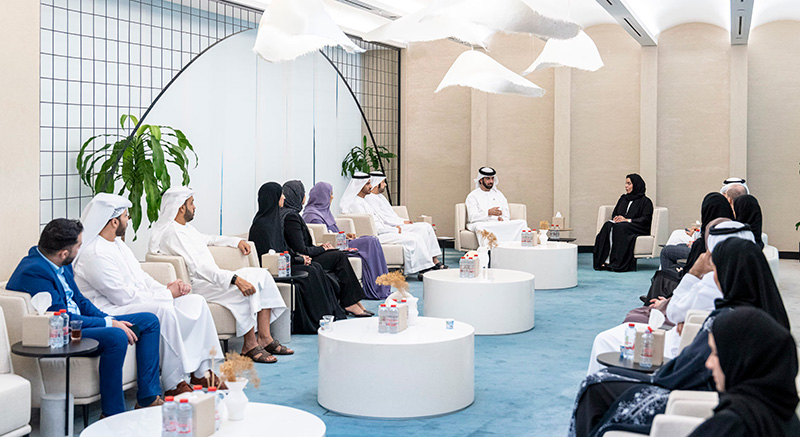
Al Neyadi made the remarks during a major media briefing hosted by the Government of Dubai Media Office as part of the “Session with an Official” series, attended by senior local media figures and editors-in-chief of major UAE newspapers.
He traced the journey of the Corporation back 138 years to the founding of the “Customs House” on the banks of Dubai Creek in 1886. This marked the beginning of organized trade in Dubai, evolving from modest resources into an institution with unwavering vision and ambition. Today, the Customs House is regarded as the “mother of all government departments” in Dubai and represents the starting point of the transformation that helped position the city as one of the world’s leading commercial and maritime centers.
“Since 1886 until today, the Ports, Customs and Free Zone Corporation has embodied Dubai’s vision to become the fastest growing, most secure, and best-connected city in the world,” Al Neyadi stated. He noted that this has been achieved through ambitious leadership, continuous investment in artificial intelligence, digital transformation, and sustainability—efforts that are paving the way for Dubai to become the number one global hub for smart maritime trade and port development.
A Pillar of Dubai’s Economy
The Corporation has become a major economic force in Dubai—not only through its oversight of JAFZA (Jebel Ali Free Zone), the world’s largest free zone, but also through its integrated economic system that includes over 12,000 regional and international companies and supports more than half a million direct and indirect jobs.
Al Neyadi revealed plans for a major restructuring of the Jebel Ali Free Zone to unlock massive new expansion opportunities. These new areas will feature advanced infrastructure, enhancing the Corporation’s ability to attract more global companies and reshaping Dubai’s investment landscape for the next 50 years.
“Our performance indicators are based on strict standards. Every figure we achieve is a new starting point for further challenge,” he said. “Our true competition is with ourselves—with the numbers we’ve achieved in the past, and with the ever-rising ceiling of accomplishment we aim for year after year.”
A Global Maritime Network
Dubai today oversees operations in more than 146 ports across 76 countries, relying on a vast human network of 155,000 employees. This widespread global presence has earned Dubai the nickname: “The ports where the sun never sets”—a reference to the 24/7 activity of its vessels and maritime operations across global time zones.
The Corporation’s portfolio includes Port Rashid, Port Al Hamriya, and Jebel Ali Port—one of the world’s largest shipping hubs—as well as a range of local facilities supporting fishing, commercial, and recreational maritime activity.
Dubai Port Code: A World First
Among the strategic projects launched in 2025 is the Dubai Port Code—the first of its kind globally. This groundbreaking initiative serves as a comprehensive guide for developing maritime infrastructure, including ports, harbors, and related marine activities.
It aims to provide a unified framework of technical standards and requirements for the design, development, and management of maritime infrastructure—not just in Dubai, but worldwide. The Code will incorporate best practices and certified technical specifications to serve as a global benchmark in the maritime sector.
Digital Transformation in Action
On the technical front, Al Neyadi outlined a robust digital strategy focusing on artificial intelligence, digital transformation, cybersecurity, and cloud infrastructure.
Key digital projects include:
-
“Port Eye”, a smart monitoring system that uses drones and AI to inspect infrastructure and ensure the safety of maritime operations.
-
“Marsa”, a unified smart platform for marina management and leasing that significantly reduces paperwork and shortens service time.
-
“Digital 04”, a national tech company offering digital solutions that are revolutionizing maritime trade and operations globally.
A Luxury Yachting Destination
Al Neyadi also revealed impressive growth in Dubai’s luxury yachting sector, with foreign yachts visiting the emirate increasing by 149% in the first half of 2025. Dubai welcomed 97 yachts during this period, compared to just 39 in the same timeframe in 2024.
This growth, he noted, reflects the rising global trust in Dubai as a premier destination for luxury maritime tourism. The increase is driven by Dubai’s advanced infrastructure, world-class services, and iconic attractions—cementing its position among the world’s top yachting hubs.