Dubai’s Roads and Transport Authority (RTA) has unveiled a series of innovative transport projects during the 11th Dubai International Project Management Forum. These projects — including the Dubai Loop, Sky Pod, trackless tram, and solar-powered Rail Bus — reflect the city’s forward-thinking vision to redesign its transportation system and reduce congestion.
Detailed in a special publication titled “A Century of Mobility in Dubai”, the initiatives together are designed to accommodate up to 150,000 passengers per hour — with the Dubai Loop handling 100,000 passengers, and the Sky Pod 50,000. The projects mark a significant shift in how Dubai plans to move people across the city: not just on roads, but also through underground tunnels and aerial systems.
Dubai Loop: Fast, Underground, and Game-Changing
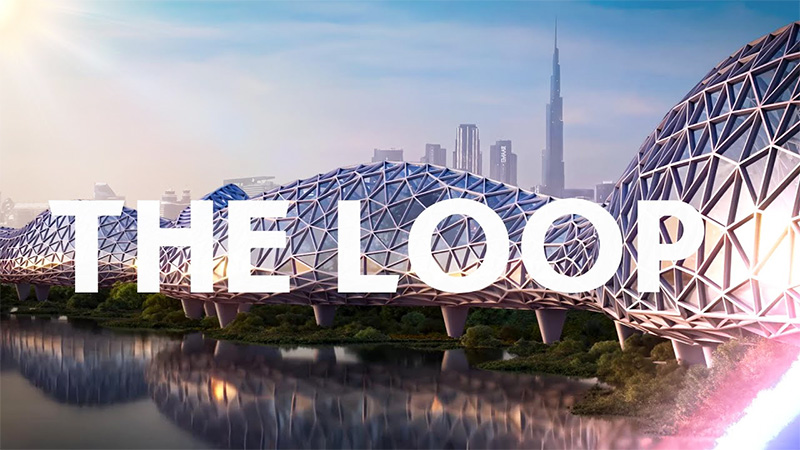
Still under study, the Dubai Loop reimagines long-distance travel within the city, aiming to convert extended commutes into short, efficient trips. Designed as a 17-kilometer underground tunnel, the system could transport up to 100,000 passengers per hour at speeds reaching 160 km/h.
The RTA is exploring a potential partnership with The Boring Company, owned by tech entrepreneur Elon Musk. The concept resembles a futuristic “wormhole” for commuting, allowing people to bypass surface traffic completely. If implemented, the Dubai Loop would represent a revolutionary leap in urban transport and send a strong message about Dubai’s commitment to shaping the future of mobility.
Sky Pod: Urban Transport Elevated
Also featured is the Sky Pod system, described as a blend of suspended train and ski-lift technology. The self-driving, electric pods travel quietly on carbon-composite tracks suspended 7.5 meters above the ground, offering a completely new experience of public transport.
Each pod can carry 4 to 6 passengers, moving at speeds of up to 150 km/h. With a planned 65-kilometer route, the Sky Pod system is expected to serve up to 20,000 passengers per hour initially, increasing to 50,000 in the future.
Aside from its futuristic appeal, the system significantly reduces land usage — consuming 100 times less ground space than traditional transit systems — and is five times more energy-efficient than electric vehicles, aligning with Dubai’s sustainability goals.
A Vision for 2030 and Beyond
These projects support Dubai’s broader goal of making 25% of all city trips autonomous by 2030. By shifting transport systems to the skies and underground, the city aims to reduce congestion, reclaim urban space, and improve energy efficiency.
The RTA’s focus isn’t just on moving people — it’s about redefining the experience of movement itself. The Sky Pod, for example, turns daily commutes into calm, scenic journeys above the city, transforming rush hour into what the RTA calls an aerial “ballet” rather than a burden.
More Innovations on the Horizon
Dubai is also exploring partnerships with global tech leaders such as SkyTran (USA) and Unitsky String Technologies (Belarus) to develop aerial transit solutions optimized for dense urban environments. These systems are particularly suited for hot, humid climates where walking and cycling are less practical year-round.
In addition, the RTA is studying the deployment of a trackless tram system — electric, eco-friendly, and more cost-efficient than traditional trams. Each tram unit will include three carriages with a capacity of 300 passengers, a maximum speed of 70 km/h, and a range of 100 kilometers per charge.