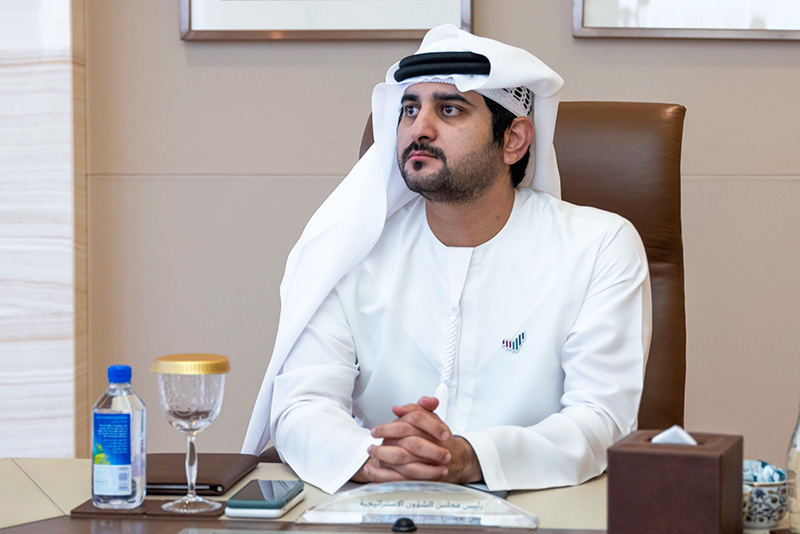
His Excellency Mohammed Abdullah Al Gergawi, Chairman of the Museum of the Future, affirmed that Dubai and the United Arab Emirates have made designing the future a shared goal that unites the world in creating a better tomorrow—one built on harnessing promising present and future opportunities, striving to serve communities, and ensuring the best for generations to come.
This statement came on the occasion of the Museum of the Future reaching five million visitors since its opening on 22 February 2022—an indicator that reflects its expanding global presence and the growing demand for its programs and unique knowledge-driven experience. It also underscores its status as a leading destination attracting visitors from diverse cultures and nationalities, and as a space where minds exchange expertise and knowledge to shape the ideas of tomorrow and transform them into reality—embodying the values of optimism, innovation, and humanity.
Mohammed Al Gergawi said: “The Museum of the Future, which embodies the vision of His Highness Sheikh Mohammed bin Rashid Al Maktoum, Vice President and Prime Minister of the UAE and Ruler of Dubai, may God protect him, has succeeded in bringing together leading minds capable of asking the right questions and formulating practical solutions to future challenges. Since its launch four years ago, it has evolved into a living knowledge ecosystem that translates ideas into programs, dialogues, and experiences that inspire people, equip them with tools for understanding and action, and serve as a laboratory for ideas contributing to practical solutions for the challenges of tomorrow.”
He added: “The Museum of the Future brings together thought and experience, dialogue and application, becoming a global space that empowers individuals to understand rapid transformations and prepare for them. It embodies the UAE’s message that the future is not something to be awaited, but rather designed and built today through innovation and creative collaboration.”
Throughout its journey, the museum has organized 620 events, conferences, and dialogue sessions addressing key topics including artificial intelligence, sustainable cities, and the future of education, healthcare, the economy, work, technology, and the arts. It has also delivered 224 educational programs, workshops, and interactive knowledge experiences targeting various age groups and professional sectors.
The museum has further strengthened its position as a premier destination for high-level official visits. In 2025, it welcomed nine heads of state and 46 ministers during official tours in which they explored its facilities and initiatives.
The museum continues to serve as a center for global dialogue and collaborative action through prominent initiatives, including hosting the Dubai Future Forum—the world’s largest gathering of future experts and designers—as well as the Future Talks series, which brings together thinkers, decision-makers, and international experts to discuss major scientific, technological, and humanitarian transformations.
It also serves as an incubator for initiatives supporting Arab talent, foremost among them the Arab Genius initiative, which aims to empower creative minds and revive the region’s civilizational role in contributing to shaping humanity’s future. Eighteen distinguished Arab figures have been honored across the past three editions of the initiative.
The museum’s programs have witnessed broad participation from students, researchers, entrepreneurs, and policymakers through initiatives focused on building future capabilities, enhancing foresight skills, and linking academic knowledge with practical application.
To expand its impact, the museum relies on a network of strategic partnerships with research and academic institutions as well as global companies, which have contributed to developing its exhibition content and supporting its specialized laboratories in health, education, smart cities, energy, transport, and sustainability.
During the World Governments Summit 2026, His Highness Sheikh Hamdan bin Mohammed bin Rashid Al Maktoum, Crown Prince of Dubai, Deputy Prime Minister, Minister of Defence, and Chairman of the Board of Trustees of Dubai Future Foundation, directed that the Museum of the Future be designated as the permanent headquarters of the Life and Biodiversity Laboratory. This step reflects Dubai’s commitment to supporting scientific innovation and harnessing biotechnology to protect the environment and preserve nature.
The laboratory, established in collaboration with Colossal Biosciences, aims to introduce researchers and scientists to the latest innovations in conserving endangered species and enhancing ecosystem sustainability, while also raising visitors’ awareness of the importance of biodiversity and its vital role in sustaining life on planet Earth.
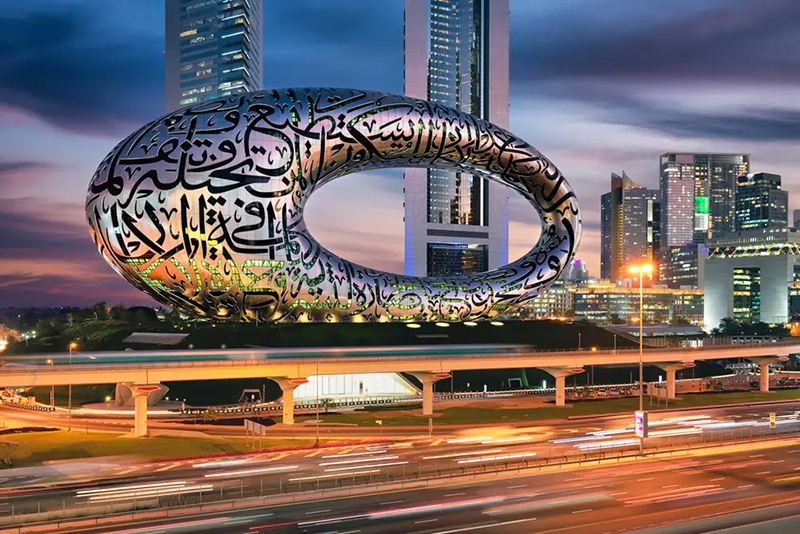
Architecturally, the Museum of the Future building embodies Dubai’s narrative of transforming bold ideas into reality. Rising 77 meters, it features an iconic design that combines engineering innovation with cultural symbolism. Its façade consists of 1,024 meticulously crafted panels covering 17,600 square meters, adorned with Arabic calligraphy bearing quotes by His Highness Sheikh Mohammed bin Rashid Al Maktoum, may God protect him—ensuring that the museum’s message of imagination and innovation remains present in the city’s urban landscape.
Sustainability is reflected in both the museum’s design and operations. More than 30 percent of its energy needs are generated through solar sources, alongside advanced solutions in thermal insulation, cooling efficiency, and energy-saving lighting. In 2023, the museum received the Platinum LEED certification for green buildings, reinforcing its position as a leading model of sustainable architecture in the region.
As it enters its fifth year, the Museum of the Future affirms that its success is measured not only by the number of visitors or the scale of its events, but by its ability to create lasting knowledge impact, build international bridges of cooperation that transform challenges into opportunities, and entrench a culture of scientific optimism and innovation as pillars of a more humane and sustainable future.
The museum’s story began as an idea launched on the sidelines of the World Governments Summit, followed by the official announcement of the project on 3 March 2015 and the issuance of Law No. 19 of 2015 establishing it, culminating in its global inauguration in 2022. Today, it stands among the most attractive destinations for visitors and one of the fastest-rising institutions on the global knowledge landscape.