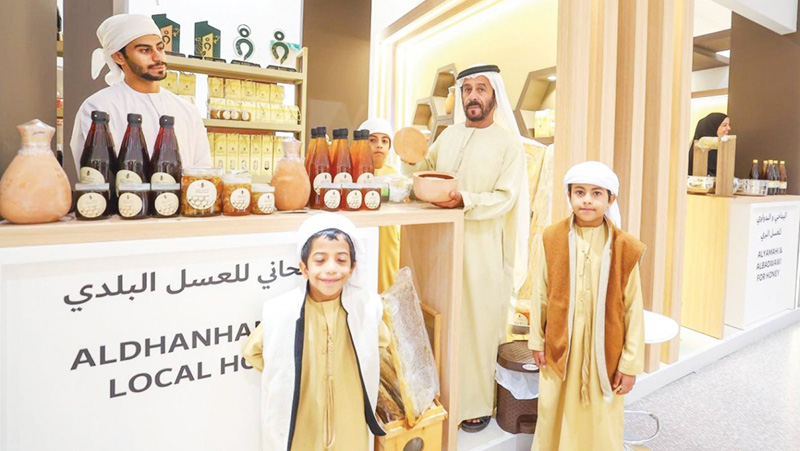
The Hatta Honey Festival has once again brought together beekeepers from across the UAE, highlighting the deep-rooted traditions of honey production that have been passed down through generations. This annual event not only celebrates the art of beekeeping but also serves as a platform to exchange knowledge, display local varieties of honey, and discuss challenges facing the industry today.
Held in the mountainous region of Hatta, the festival reflects the close connection between the craft of beekeeping and the local environment — a relationship that has shaped the agricultural identity of the Emirates over the years.
A Gathering of Passionate Beekeepers
Among the regular participants is Ali Al Dhannhani, a veteran beekeeper who has been in the business for nearly 30 years. His participation in both local and international exhibitions — including in Europe and the Gulf — showcases his dedication to the craft. At Hatta, he proudly displays various types of locally produced honey and shares insights into the production process.
Al Dhannhani emphasized the importance of involving his family, especially his children, in every step of honey production — from managing the hives to packaging the final product. His farm, nestled in the mountains of Dibba, Fujairah, benefits from the wild plants and rugged landscape that provide an ideal environment for bees, contributing to the distinct taste and quality of the honey.
Beekeeping Across Regions and Seasons
Mohammed Saeed, a beekeeper from the western mountain areas of Al Ain, highlighted how seasonal hive relocation is essential to successful honey production. Depending on the flowering season — particularly during the blooming of sidr trees — hives are moved between Abu Dhabi, the northern Emirates, and Ras Al Khaimah to maximize nectar collection.
He noted that the festival creates valuable networking opportunities for beekeepers to share best practices — from selecting hive locations to dealing with environmental changes. Events like this, he said, play a crucial role in boosting the quality and sustainability of local honey production.
Preserving Traditions Through Community Engagement
For Khalid Al Badwawi, a beekeeper based in Hatta, the festival is more than just an exhibition — it’s a vital meeting point for exchanging knowledge and learning from the experiences of others. It also serves to support local producers, enhance their skills, and position Hatta as a hub for eco-agriculture and sustainable production.
Al Badwawi stressed how such gatherings not only promote the beekeeping trade but also help in preserving it for future generations, especially in mountainous communities where the craft is closely tied to the land.
Combating Challenges with Expertise and Awareness
Ghalib Thabit Al Kathiri pointed out one of the key challenges faced by the industry — the difficulty consumers face in distinguishing between genuine and counterfeit honey. He explained that hands-on experience is vital in identifying authentic honey, based on its flavor, texture, and certain simple tests.
He emphasized that platforms like the Hatta Festival are essential for raising awareness about honey authenticity and educating the public about production methods. Sharing knowledge among beekeepers also helps tackle common challenges and ensures consistent product quality.
A Diverse and Rich Product of Nature
The honey showcased at the festival reflects the natural diversity of the UAE — from high mountain ranges to open plains, and from fixed apiaries to mobile ones that follow the seasons. This variety results in a wide spectrum of honey types, differing in color, taste, and consistency, highlighting the richness of the local product.
Beekeepers at the event agreed that maintaining honey quality demands not only field experience but also an in-depth understanding of local ecosystems and a commitment to responsible beekeeping practices.
Sustaining a Vital Local Industry
The Hatta Honey Festival continues to serve as a vital platform that supports local honey producers, encourages intergenerational knowledge sharing, and addresses key industry issues. Through showcasing diverse honey types and emphasizing quality, it contributes to sustaining the UAE’s honey sector and strengthening its presence in regional and global markets.