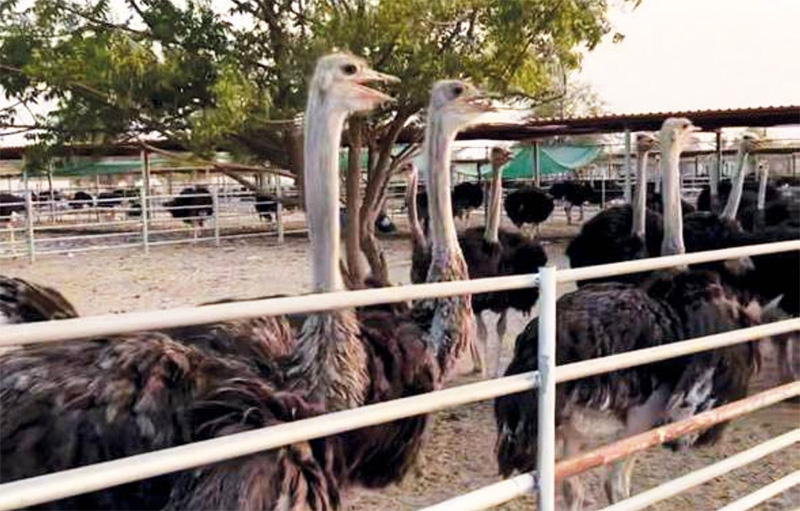
In a move aimed at supporting local food production and promoting sustainable agriculture, Emirati farmer Fahad Saeed Al Ketbi has established a growing ostrich farm in Al Ain, transforming a small-scale idea into contributor to the UAE’s food security goals.
Al Ketbi began his journey with just 15 African ostriches, but over time, the project developed into a full-fledged farm now home to nearly 2,000 ostriches. The farm, named Ostrich Oasis, is part of a broader vision to offer alternative protein sources to the local market and to diversify the UAE’s meat supply.
A Sustainable Farming Model
According to Al Ketbi, the farm currently produces around 75 tons of ostrich meat per year, offering a high-protein, low-cholesterol alternative to more common types of meat. But the project goes beyond just meat production.
He explains that the entire ostrich is used in a sustainable and integrated way:
-
Bones are processed and reused as nutritional products for pets such as dogs and cats.
-
Feathers and fats are utilized in the cosmetics industry, including in the production of items like lipstick.
-
The fat is also extracted for use in medical and wellness applications, as it contains essential vitamins and Omega-3 fatty acids.
Al Ketbi emphasizes the value of ostrich products not only for their nutritional benefits, but also for their growing demand in both cosmetic and medical sectors.
Environmentally Friendly and Adapted to the Desert
Ostriches have proven to be a practical choice for farming in desert climates, making them particularly suitable for the UAE. Compared to traditional livestock like cows and camels, ostriches consume less food and water, making them more efficient and environmentally sustainable.
“Each ostrich can produce up to 30 chicks per year,” Al Ketbi notes, which supports the scalability and long-term sustainability of the farm. This high reproduction rate allows for a consistent supply of meat and other by-products.