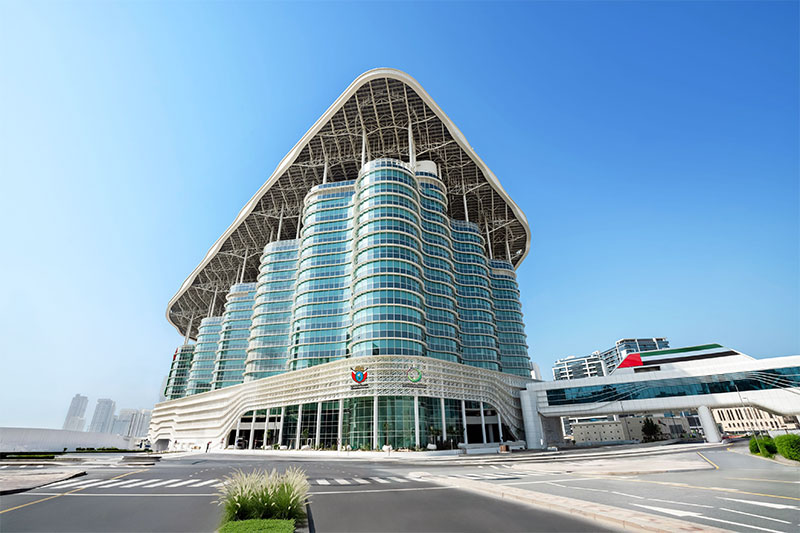
As the Mohammed Bin Rashid Space Centre (MBRSC) celebrates its 20th anniversary, the UAE marks a significant milestone in its journey toward becoming a global leader in space science, technology, and innovation.
The Centre has played a vital role in transforming the UAE into a major player in the space sector, building a fully integrated space ecosystem that supports scientific advancement, economic growth, and international cooperation.
A Visionary Beginning
The journey began on February 6, 2006, with the founding of the Emirates Institution for Advanced Science and Technology — a research hub aimed at developing national capabilities in space.
The establishment was inspired by the forward-thinking vision of His Highness Sheikh Mohamed bin Zayed Al Nahyan, President of the UAE, may God protect him, and His Highness Sheikh Mohammed bin Rashid Al Maktoum, Vice President and Prime Minister of the UAE and Ruler of Dubai, may God protect him. The goal was to make space a pillar of the nation’s future and a driver of scientific excellence.
Over the years, the institution evolved into the Mohammed Bin Rashid Space Centre, becoming the UAE’s primary agency for developing and implementing its ambitious space strategy.
Building a National Satellite Industry
In two decades, MBRSC succeeded in establishing a full-scale satellite development and operations program. What began with international partnerships has grown into a fully independent national capability.
-
The UAE launched DubaiSat-1 and DubaiSat-2 in collaboration with global partners.
-
Then came a historic milestone: the development and launch of KhalifaSat, the first entirely Emirati-built satellite.
-
Other achievements include Nayif-1 (the UAE’s first nanosatellite), DMSat-1 (the region’s first environmental nanosatellite), and HCT-SAT-1, developed by Higher Colleges of Technology students.
-
In 2025, MBRSC launched MBZ-SAT, the region’s most advanced satellite in terms of imaging precision and data capacity, along with “Etihad Sat”, equipped with radar technology for high-resolution imaging in all weather conditions.
Hope Probe: A Historic Mars Mission
In 2020, the UAE stunned the world by becoming the first Arab nation to reach Mars with the launch of the Hope Probe.
By February 2021, the probe successfully entered Martian orbit, making the UAE the fifth space agency in history to do so. Since its arrival, the probe has collected more than 5.4 terabytes of data, providing vital insights into the Martian atmosphere and space weather dynamics.
Human Spaceflight: Breaking New Ground
The UAE has also made groundbreaking strides in human spaceflight:
-
In September 2019, astronaut Hazzaa Al Mansoori became the first Emirati and first Arab to reach the International Space Station (ISS).
-
This was followed by the “Zayed Ambition 2” mission in 2023, where Dr. Sultan Al Neyadi spent six months in space, completing the longest Arab space mission in history and conducting over 200 scientific experiments.
Exploring the Moon
In 2024, MBRSC launched the UAE’s Mission to the Moon, which featured Rashid Rover 1, the first Arab lunar mission to reach lunar orbit.
The Centre is now developing Rashid Rover 2, which will explore the far side of the Moon and conduct studies on lunar geology, plasma environment, and surface temperatures using cutting-edge technologies.
In collaboration with NASA, MBRSC is also developing the “Emirates Airlock”, a pressurization module for NASA’s future lunar Gateway Station. This unit will support spacewalks and scientific operations on the Moon.
Supporting Global Disaster Response
Since 2016, MBRSC has been part of the International Charter on Space and Major Disasters, and later joined the Sentinel Asia Initiative, reinforcing the UAE’s commitment to humanitarian efforts.
The Centre now receives around 8 weekly requests for satellite imagery to support global disaster relief and has aided more than 40 international emergency missions in 2024 alone.
Investing in Talent and the Space Economy
MBRSC has invested heavily in national capacity-building through educational outreach and training programs that engaged thousands of UAE students in STEM fields.
Through intensive engineering training, Emirati professionals now lead and operate complex space missions, demonstrating the UAE’s ability to produce world-class talent.
Today, the UAE dominates over 50% of the regional space technology application market, and contributes 40–45% of total space sector investment in the Middle East — affirming its role as a regional powerhouse in the global space economy.
Women Leading in Space
MBRSC is also a global model for gender diversity and inclusion in the space sector. Women make up approximately 40% of the Centre’s workforce, surpassing global industry averages.
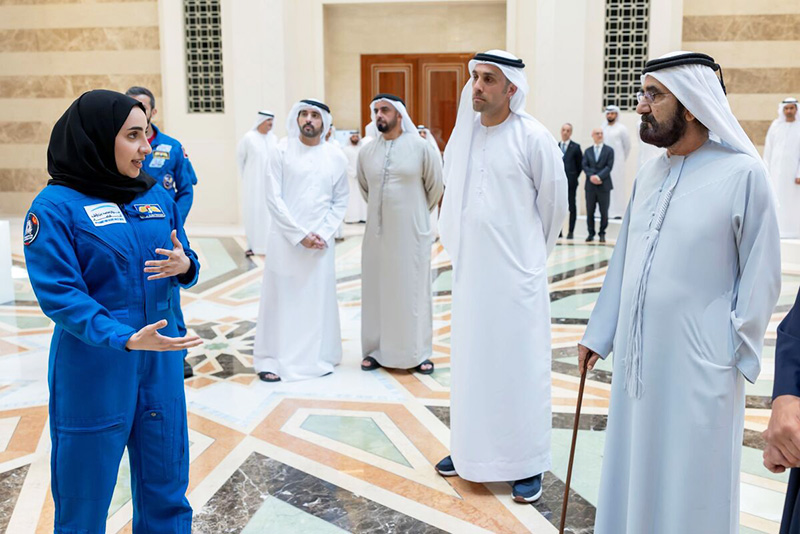
The journey of Nora Al Matrooshi, the first Emirati female astronaut, stands as a powerful testament to MBRSC’s commitment to equal opportunities. Notably, 80% of the science team on the Emirates Mars Mission were women.
Empowering Startups and Innovation
Beyond its institutional role, MBRSC supports space-tech startups, offering technical mentorship, infrastructure, and strategic partnerships — paving the way for a sustainable, globally competitive space economy in the UAE.