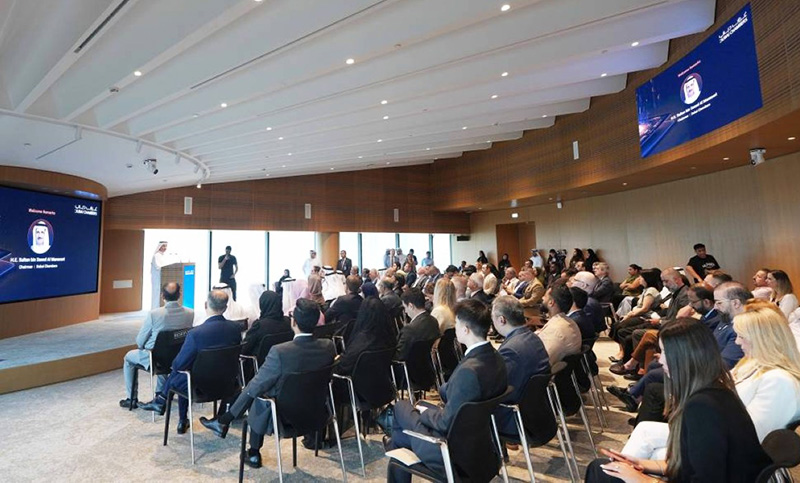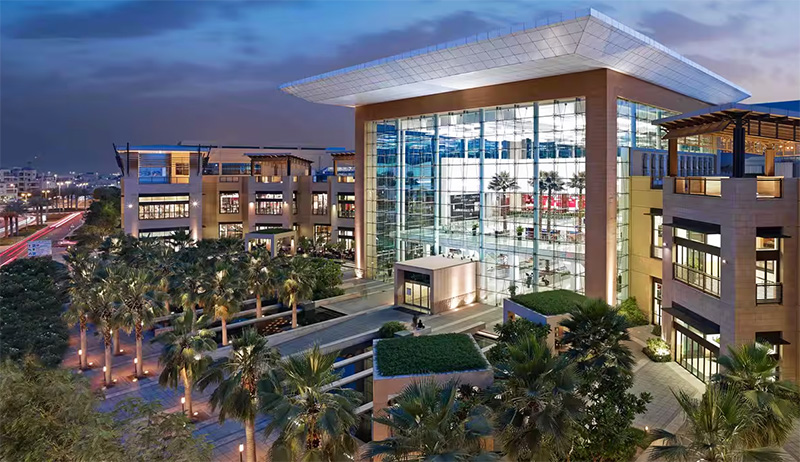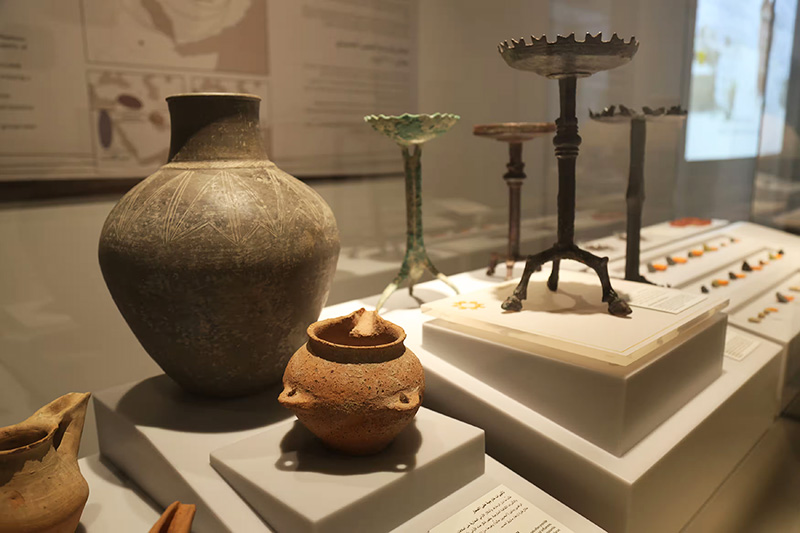
The Dubai Culture and Arts Authority, known as “Dubai Culture,” is participating in the 59th Seminar for Arabian Studies, organized annually by the International Association for the Study of Arabia. The participation aims to highlight the latest academic research related to the Arabian Peninsula and draw attention to the scientific and cultural value of Dubai’s archaeological sites.
This participation forms part of the authority’s ongoing efforts to promote the emirate’s significant archaeological discoveries and make the findings of specialized studies available to researchers and experts. These efforts contribute to expanding knowledge of the region’s history while strengthening Dubai’s presence at international academic forums.
The participation also aligns with Dubai Culture’s responsibilities and sectoral priorities, which focus on supporting scientific research, preserving local cultural heritage, and highlighting its importance as an essential part of the historical memory of Dubai and the Arabian Peninsula.
Dubai Culture Participates in the Seminar for Arabian Studies
The University of Bologna in Italy will host the seminar from July 30 through August 1, 2026, bringing together a distinguished group of researchers, experts, and specialists in the archaeology and history of the region.
The seminar’s program will feature discussions of recent studies in archaeology, history, inscriptions, languages, literature, arts, ethnography, and geography, along with other subjects related to the history and cultural development of the Arabian Peninsula.
The seminar represents an important scientific platform for exchanging knowledge and expertise among researchers and for exploring the latest findings and methodologies used in archaeological research and academic documentation.
An Archaeological Dagger Reflects the Skills of Saruq Al-Hadid’s Inhabitants
As part of the seminar’s scientific program, Maryam Ali Al Suwaidi, Senior Archaeological Excavator in the Archaeology Department at Dubai Culture, will present a research paper titled “A Copper Dagger with a Human-Shaped Form from the Saruq Al-Hadid Archaeological Site.”
The paper examines one of the most notable discoveries made by the Archaeology Department’s teams during excavations at Saruq Al-Hadid. The artifact is a unique copper dagger dating to the Iron Age, specifically the first millennium BCE.
The dagger features a handle designed in the form of a human head, along with various decorative details that reflect the advanced artistic and cultural level achieved at the site. It also demonstrates the skills of the site’s inhabitants in metalworking and the decoration of tools during that historical period.
The artifact provides important scientific evidence that can help researchers understand ancient metal industries and the level of artistic and technical development reached by the communities that once inhabited the area.
Saruq Al-Hadid as a Center of Trade and Cultural Exchange
The research paper also highlights the role of Saruq Al-Hadid within the trade and cultural exchange networks that connected southeastern Arabia with neighboring regions during the Iron Age.
Archaeological discoveries at the site point to the existence of commercial and cultural relations with several civilizations, confirming the important position the site occupied along regional trade and communication routes.
The study of tools, metal objects, and decorative elements uncovered at the site also helps provide a clearer picture of economic and craft activities, as well as the site’s role in the movement of goods, expertise, and technologies among ancient communities.
Strengthening Dubai’s Presence in Academic Discussions
Badr Mohammed Al Ali, Director of the Archaeology Department at the Dubai Culture and Arts Authority, said: “The discoveries made at Dubai’s archaeological sites represent an important scientific resource that enables specialists to explore the relationship between Dubai’s ancient inhabitants and other civilizations, and to understand the emirate’s history and its role in building bridges of communication and interaction among cultures throughout the ages. This seminar also provides an important platform for presenting the findings of studies related to the Saruq Al-Hadid site before a distinguished group of researchers, strengthening Dubai’s presence in international academic discussions and enabling the exchange of perspectives and expertise, as well as access to the latest methods in archaeological research and documentation. This contributes to the development of archaeological studies and supports the authority’s efforts to preserve local cultural heritage and highlight its scientific value.”
The authority’s participation in the seminar reflects its commitment to presenting research findings connected to Dubai’s archaeological sites to the international academic community and strengthening cooperation and knowledge exchange with universities, research institutions, and specialized experts.
The event also offers an opportunity to explore the latest methods used in archaeological research, excavation, and documentation, supporting the development of archaeological studies and reinforcing Dubai’s position as an active center for heritage preservation and the study of the region’s history.
An Archaeological Site with a History Spanning Thousands of Years
Saruq Al-Hadid is considered one of Dubai’s most important archaeological sites. It is believed to have served as a major center for metal smelting and the production of metal tools during the Iron Age, particularly in the first millennium BCE.
Excavation work and archaeological discoveries made at the site over the years have shown that its history extends across several long periods, beginning with the Neolithic era and continuing through the Bronze Age, the Iron Age, and the Islamic periods.
This extensive historical record reflects continuous human settlement and the site’s cultural development across multiple eras. The discovered artifacts also reveal its connections through trade and cultural interaction with several civilizations over time.
The site’s diverse discoveries give researchers an opportunity to better understand life in the region and study the ancient industries, production methods, and trade practices used by its inhabitants during different historical periods.
Bringing Dubai’s Heritage to the World
Dubai Culture’s participation in the 59th Seminar for Arabian Studies reflects its commitment to introducing Dubai’s cultural legacy to a wider audience and transforming archaeological discoveries into valuable scientific resources that contribute to research on the history of the emirate and the Arabian Peninsula.
The participation also strengthens the presence of Saruq Al-Hadid in international academic discussions and highlights the evidence it contains of advanced metal industries, extensive trade networks, and cultural communication in the region thousands of years ago.