His Excellency Mattar Al Tayer, Director General and Chairman of the Board of Executive Directors of Dubai’s Roads and Transport Authority (RTA), has revealed that the emirate is exploring a new direction in future transportation through a study to develop an integrated underground system for moving passengers and goods. The initiative aims to improve mobility efficiency and strengthen connections between different modes of transportation, reflecting Dubai’s ambition to build a future-ready transport network that operates across multiple dimensions.
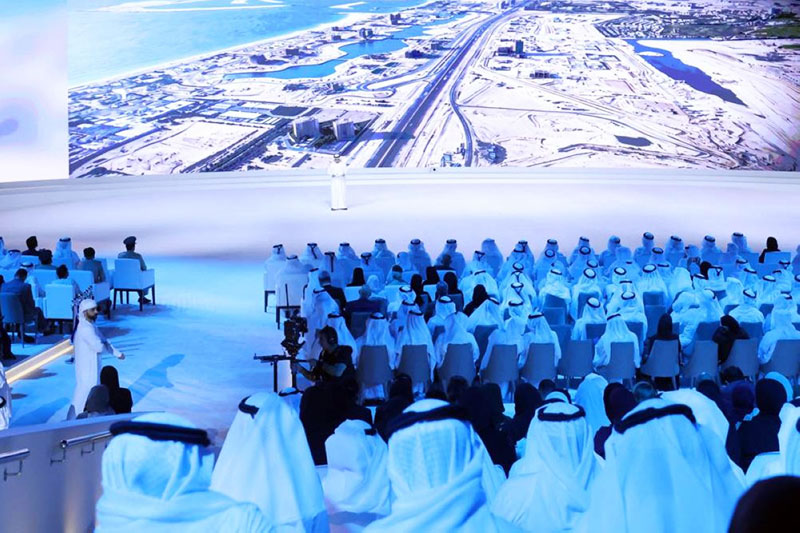
The announcement came during His Excellency’s address, titled “Dubai Mobility in Three Dimensions,” at the Mohammed bin Rashid Leadership Forum. During the session, His Excellency reviewed the major changes that have shaped Dubai’s transportation sector, the plans being developed to accommodate rapid population growth and increasing daily travel demand, and the role of visionary leadership in delivering strategic infrastructure projects that have generated substantial economic returns.
Integrated Underground Transport System to Strengthen Dubai’s Leadership in Future Mobility
Dubai’s Roads and Transport Authority is studying innovative transportation solutions across three dimensions: on the ground, in the air, and underground, opening up new possibilities for the movement of passengers and goods.
His Excellency Mattar Al Tayer explained that planning the future of mobility in Dubai involves more than simply determining how people travel from one place to another. It also requires exploring where transportation can take place and how different forms of mobility can develop. His Excellency noted that the RTA is working toward an integrated transport system built around three main dimensions.
According to His Excellency, the first dimension focuses on ground transportation, particularly the expansion of autonomous driving technology. Dubai aims to make one in every four trips autonomous by 2030, a target designed to improve transportation efficiency and keep pace with technological developments worldwide.
His Excellency added that the second dimension involves aerial mobility through the air taxi project, with the first stations scheduled to open during the current year. The project is expected to introduce another transportation option in Dubai and support the development of new solutions for urban mobility.
The third dimension, His Excellency explained, involves exploring the potential of underground transportation. An RTA team is currently studying the development of an integrated system for transporting passengers and goods beneath the city. The proposed system is intended to improve transport efficiency, respond to future mobility requirements, and support closer integration between different transportation modes.
His Excellency emphasized that shaping the future requires leaders with the vision and ability to turn ideas into reality. He also highlighted the RTA’s plans to develop 100 artificial intelligence products, recognizing AI as one of the key drivers of the next phase of transportation development.
11 Million Daily Trips Highlight Future Mobility Challenges and the Importance of People-Centered Planning
Dubai’s daily travel figures and population growth underline the importance of preparing early for future transportation needs and developing infrastructure capable of accommodating the emirate’s continued expansion.
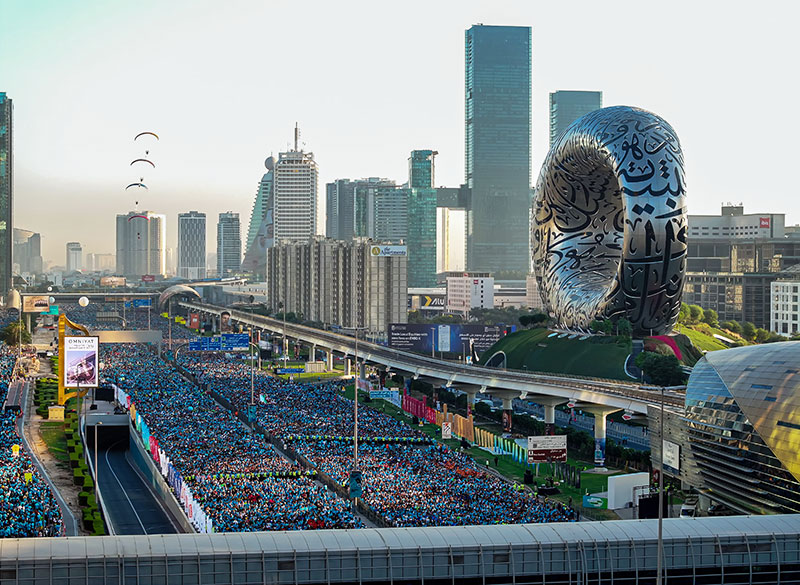
His Excellency Mattar Al Tayer stated that Dubai is a city in constant motion, recording approximately 11 million trips every day, at a rate of up to 7,000 trips per minute. These figures reflect the scale of economic activity, urban development, and population growth across the emirate.
His Excellency explained that behind every trip is a person, a destination, and a particular need. For this reason, transportation planning must place people at its center, providing efficient and seamless travel options that respond to the changing needs of residents and visitors.
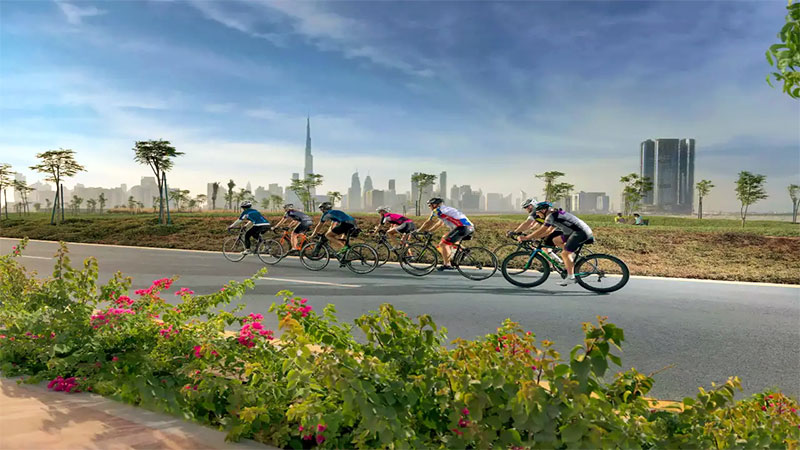
His Excellency also pointed to the extensive development of Dubai’s road network as an example of the emirate’s progress. If all its roads were laid out in a single straight line, their combined length would equal half the circumference of the Earth, demonstrating the scale of infrastructure investment and ongoing expansion.
His Excellency noted that Dubai’s daytime population reaches approximately six million people, with that figure expected to double in the future. Such growth makes it increasingly important to develop innovative, forward-looking transportation solutions that can meet future demand and maintain the smooth movement of people and goods throughout the emirate.
His Excellency stressed that the most important question leaders should ask is: “How can we stay ahead of the future rather than wait for it?” He described this approach as one of the most valuable lessons learned from His Highness Sheikh Mohammed bin Rashid Al Maktoum, Vice President and Prime Minister of the UAE and Ruler of Dubai, may God protect him, whose leadership has established a culture of preparing for the future rather than simply responding to present-day challenges.
Strategic Investments Since 2006 Generate AED 319 Billion in Economic Returns
The leadership vision of His Highness Sheikh Mohammed bin Rashid Al Maktoum, Vice President and Prime Minister of the UAE and Ruler of Dubai, may God protect him, laid the foundations for a major transformation of Dubai’s roads and transportation sector, improving mobility efficiency and delivering substantial economic and financial returns.
His Excellency Mattar Al Tayer reviewed the main stages of Dubai’s transportation development, explaining that before 2005, the emirate was experiencing rapid growth across various sectors, while its road infrastructure was struggling to keep pace. This imbalance resulted in considerable losses of time and effort due to traffic challenges.
His Excellency emphasized that the vision of His Highness Sheikh Mohammed bin Rashid Al Maktoum, Vice President and Prime Minister of the UAE and Ruler of Dubai, may God protect him, went beyond temporary solutions to transportation challenges. Instead, the focus was on establishing an integrated and sustainable transportation system capable of supporting the emirate’s economic and urban development over the long term.
His Excellency explained that His Highness had entrusted him with the task of developing the roads and transportation sector and given him two months to prepare a development study. However, the team completed the assignment in just half the allotted time, reflecting an approach centered on swift execution and turning leadership directives into actionable plans.
His Excellency noted that 2006 marked the establishment of the Roads and Transport Authority, with a budget of AED 75 billion. His Highness Sheikh Mohammed bin Rashid Al Maktoum, Vice President and Prime Minister of the UAE and Ruler of Dubai, may God protect him, approved the authority’s plans in a single meeting, marking the beginning of a new phase of investment in strategic projects and the development of an integrated transportation network serving different areas of Dubai.
His Excellency added that the results of this vision are evident today in the substantial economic savings and returns generated by roads and transportation projects, which have reached AED 319 billion, alongside financial returns totaling AED 156 billion. These figures demonstrate the long-term impact of infrastructure investment and its contribution to strengthening Dubai’s competitiveness and economic appeal.
Dubai Maintains Momentum on Major Projects During Crises, Reinforcing Its Commitment to the Future
Dubai’s experience in delivering major transportation projects demonstrates how economic challenges and exceptional circumstances have not brought development to a halt, but have instead reinforced a culture of achievement and long-term investment.
His Excellency Mattar Al Tayer emphasized that one of the most important lessons established by His Highness Sheikh Mohammed bin Rashid Al Maktoum, Vice President and Prime Minister of the UAE and Ruler of Dubai, may God protect him, is that crises should not lead to the postponement of projects or the abandonment of plans. Instead, difficult circumstances can provide an opportunity to accelerate progress and maintain momentum.
His Excellency recalled the preparations for launching the Dubai Metro project, which cost AED 34 billion. He explained that, as geopolitical developments began to unfold, he had concerns about the timing of the project’s launch. Those concerns were followed by a phone call confirming the need to prepare for the launch within two days, reflecting the confidence in Dubai’s ability to overcome challenges and move forward with strategic projects.
His Excellency explained that this approach was clearly demonstrated when Dubai Metro began operations during the global financial crisis in 2009. Despite the difficult economic environment, the emirate continued delivering major projects, guided by the belief that infrastructure development represents an essential investment in the future of cities.
His Excellency noted that the same approach continued during the COVID-19 pandemic, with projects moving forward through the completion of Route 2020. This was followed by the move toward the Gold Line in 2026 amid more recent geopolitical circumstances, reflecting Dubai’s commitment to consistent planning and progress toward long-term strategic objectives.
His Excellency stressed that circumstances and challenges may change from one period to another, but Dubai’s direction remains consistent: to continue building, developing, and shaping the future. This approach is supported by a leadership vision that anticipates change and seeks to turn challenges into opportunities for growth and innovation.
The study of an integrated underground transportation system represents a continuation of this vision. By exploring modern technologies and expanding mobility options on the ground, in the air, and underground, Dubai is working to meet its future transportation needs while strengthening its position as a leading city in the development of smart and sustainable mobility solutions.