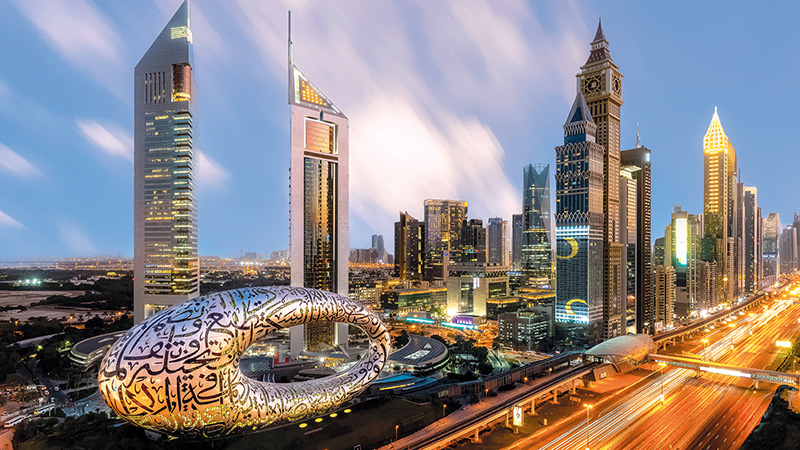
Dubai Digital, through the Dubai Data and Statistics Establishment, announced that the population of the Emirate of Dubai reached four million and 580 thousand by the end of 2025, marking an increase of approximately 332 thousand people compared with the end of 2024 and a growth rate of 7.5%.
The announcement came alongside the approval by His Highness Sheikh Hamdan bin Mohammed bin Rashid Al Maktoum, Crown Prince of Dubai, Deputy Prime Minister, Minister of Defense, and Chairman of The Executive Council of Dubai, of the real-time census and population growth monitoring project in Dubai.
The project is based on an advanced digital methodology that relies on administrative records, smart systems, and real-time data, allowing population changes to be monitored continuously and with greater accuracy. The 7.5% population growth rate is considered one of the highest rates recorded by the emirate.
A New Strategic Milestone
Hamad Obaid Al Mansoori, Director General of Dubai Digital, said: “The approval of the real-time census and population growth monitoring project represents a new strategic milestone in Dubai’s journey toward establishing a global model for a digital government powered by data and artificial intelligence.”
He added that “data is no longer merely a statistical output, but has become national infrastructure and a strategic asset that supports decision-making, improves planning efficiency, and strengthens the ability to anticipate the future,” noting that the project reflects Dubai’s vision of using advanced technologies to build an interconnected digital ecosystem based on reliable and real-time data. This enables government entities to develop more accurate policies, more proactive services, and more efficient investments, while enhancing the emirate’s readiness to continue its sustainable growth journey across various sectors.
He continued: “What has been achieved today is the result of an integrated ecosystem built on coordination among government entities, digital trust, and continuous investment in data and artificial intelligence. These are the foundations through which Dubai continues to strengthen its position as a city that leads the future and transforms data into economic and developmental value that benefits people, society, and the economy.”
The project reflects Dubai’s ongoing direction toward strengthening its reliance on accurate data in planning and policymaking, while developing government services that are more capable of keeping pace with the rapid growth taking place across the emirate’s various sectors.
The Emirate’s Dynamism
For his part, Younus Al Nasser, Chief Executive Officer of the Dubai Data and Statistics Establishment, said that monitoring population growth in Dubai is, at its core, a living picture of a strategic landscape that reflects the emirate’s dynamism, economic vitality, and active momentum across all fields. Population growth reached 7.5%, driven by real gross domestic product growth of 5.4% in 2025 compared with 2024.
He added: “The same applies to key indicators such as tourism appeal, with Dubai welcoming 19.6 million international tourists in 2025, an increase of 5.0% compared with 2024. In this context, the population increase is not merely a statistical figure. It reflects the expansion of the labor market, growing demand for services, and improvements in well-being and quality of life. This growth contributes to guiding public policy, urban planning, infrastructure development, and health and education services, ensuring a balance between economic growth, individual well-being, and quality of life in a rapidly developing global city.”
Al Nasser continued: “Dubai is distinguished as a city full of movement and as an economic hub where millions aspire to live and work. The number of passengers traveling through Dubai airports in 2025 reached approximately 96 million, an increase of 4.9% compared with the previous year. In addition, large numbers of people travel to Dubai from other emirates across the UAE and from around the world.”
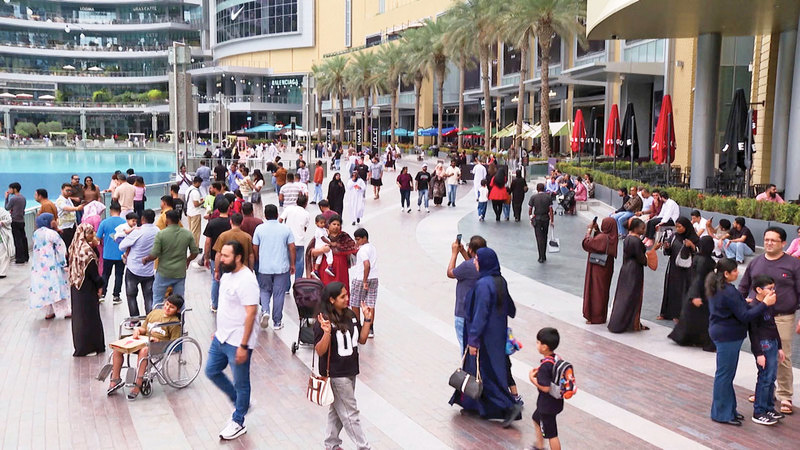
Figures for 2025 show that the average number of people present in Dubai during daytime peak hours rises to approximately six million and 392 thousand.
This total consists of residents who ordinarily live in the emirate, in addition to more than one million and 812 thousand people who are present temporarily, whether for work, tourism, or education, as well as visitors to shopping malls and other groups that travel to Dubai daily.
These figures highlight the scale of daily movement across the emirate and the importance of taking residents, visitors, and commuters from outside Dubai into account when planning transportation networks, infrastructure, and essential services.
Talent and Investment
Dubai’s population vitality reflects the emirate’s continued progress in strengthening its position among the world’s leading destinations for people and investment, supported by its advanced infrastructure, flexible economic environment, and policies that support businesses and talent.
The rise in population also confirms the emirate’s ability to attract professionals, expertise, and investment from around the world, placing Dubai among the fastest-growing cities in population terms when compared with several high-income global cities.
International comparisons show that Dubai continues to maintain its competitive position alongside major global cities in terms of population attraction, demographic diversity, and economic activity.
The Dubai Data and Statistics Establishment, part of Dubai Digital, operates in line with international standards, methodologies, and recommendations in the fields of data and statistics, while taking into consideration the emirate’s changing demographic and economic characteristics.
The establishment relies on digital data to monitor an integrated picture of the population and the movement of people across Dubai, providing accurate indicators to decision-makers, planners, and investors. This supports the analysis of population trends and helps ensure that decisions are based on reliable information.
Daily commuter movement during peak hours plays an important role in planning, as the number of people entering the emirate is equivalent to approximately 40% of Dubai’s ordinarily resident population. This flow has a direct impact on demand for roads, transportation, public services, and various everyday facilities.
The “Dubai Population Now” Project
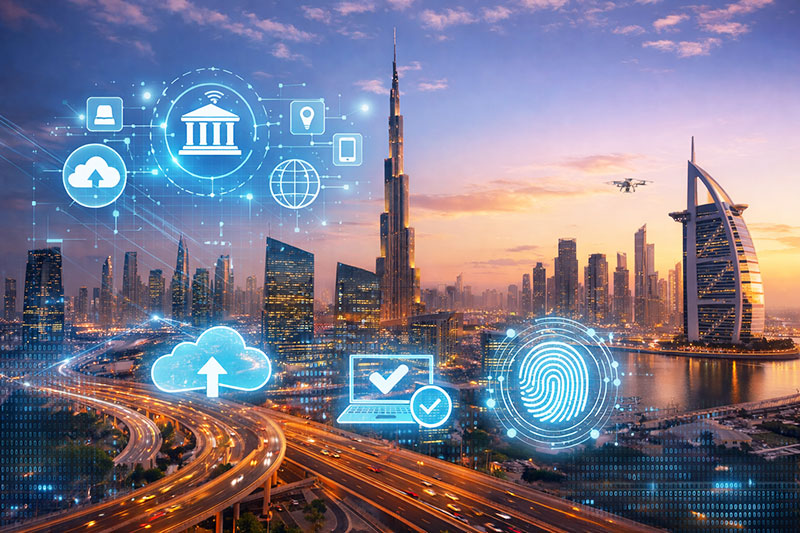
The “Dubai Population Now” project represents a major shift in the population monitoring system by adopting an advanced approach based on administrative records, smart systems, and continuously updated data.
As part of the project, the Dubai Data and Statistics Establishment integrated artificial intelligence technologies into the analysis of population data and linked them to Dubai’s real-time population clock, which is considered one of the project’s most innovative outputs.
This technological integration supports the analysis and forecasting of demographic trends, improves understanding of residency and mobility patterns, strengthens urban planning, and helps develop public services in line with the actual needs of residents and visitors.
The project also allows population data to be updated continuously, rather than relying on census results produced at widely spaced intervals, thereby improving planning flexibility and enabling a faster response to population changes.
Dubai’s Population Through History
Throughout its history, Dubai has experienced periods of rapid population growth directly linked to the major economic and urban development achieved by the emirate.
In past decades, population counts relied on traditional methods, with seven population censuses carried out between 1975 and 2005.
With the development of its digital infrastructure, Dubai has moved toward the concept of a real-time census based on the continuous flow of data, creating a major transformation in how population conditions are understood and monitored.
The new system allows growth rates to be measured in real time, unlike earlier periods when data was updated at longer intervals. This improves planning accuracy and strengthens the ability to respond quickly to demographic changes.
The population growth rate recorded in 2025, at 7.5%, is among the highest in the emirate’s history and comes close to notable growth periods, including 1980, when Dubai recorded its highest-ever population growth rate of 8.2%.
Historical publications and documents indicate that Dubai’s population did not exceed 12 thousand people in 1881. Over 144 years, the emirate recorded exceptional population growth, with its population increasing approximately 380 times to exceed 4.58 million by the end of 2025.
This growth reflects Dubai’s broad transformation and its ability to build a global city that combines economic opportunity, quality of life, and advanced services, while continuing to attract residents, talent, and investment from around the world.