Dubai Municipality has launched the world’s first challenge of its kind for designing parks using artificial intelligence, in an initiative aimed at opening the door to fresh ideas for developing public spaces and strengthening the role of advanced technologies in shaping more sustainable and livable cities.
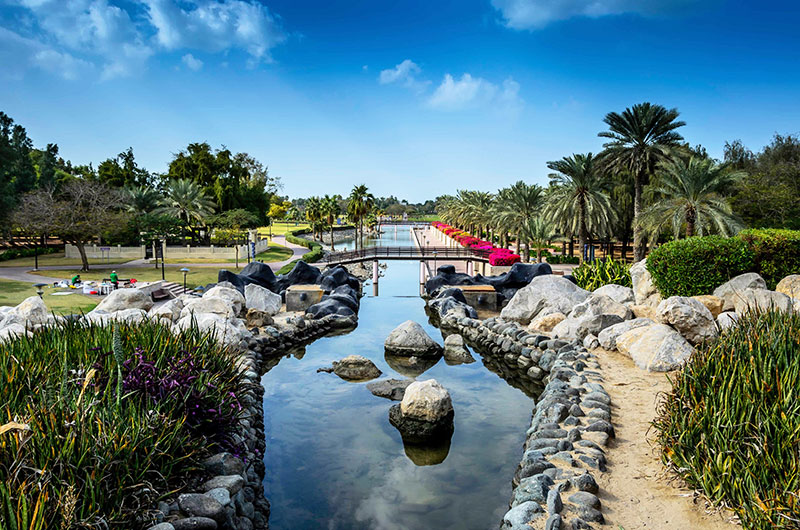
The challenge comes under the directives of His Highness Sheikh Hamdan bin Mohammed bin Rashid Al Maktoum, Crown Prince of Dubai, Deputy Prime Minister and Minister of Defence, and Chairman of The Executive Council of Dubai. Through this initiative, Dubai Municipality is inviting participants to reimagine Al Safa 2 Park through innovative design solutions that use artificial intelligence tools across the stages of planning, analysis and development.
The challenge focuses on exploring how artificial intelligence can support designers in understanding the site and the needs of park users, generating ideas, analyzing different scenarios, improving designs and producing clearer visual concepts. At the same time, the initiative emphasizes that artificial intelligence does not replace human decision-making, but serves as a supporting tool that expands possibilities and improves the quality of design solutions.
Through this step, Dubai Municipality aims to develop practical and implementable designs for Al Safa 2 Park, with a focus on sustainability, accessibility, visitor comfort and social interaction, in a way that contributes to improving quality of life in the city. Participants are expected to submit a complete master plan supported by data, drawings, analysis and visualizations, along with a clear explanation of how artificial intelligence was used throughout the design process.
His Excellency Eng. Marwan Ahmed bin Ghalita, Director General of Dubai Municipality, said that launching this challenge reflects Dubai’s direction toward leading the future of urban innovation by combining advanced technology with human-centered design. He noted that Dubai Municipality continues to develop initiatives that help enhance quality of life, strengthen community participation and transform public spaces into integrated destinations that meet people’s daily needs.
He added that artificial intelligence in this challenge is not a substitute for human creativity, but a tool that helps deepen understanding, support design decisions and create room for more diverse ideas. He also pointed out that the initiative aims to attract designers, researchers, students, startups and innovators in the fields of design and technology, supporting Dubai’s position as a leading city in the development of smart and sustainable urban environments.
The challenge is open to specialists in design, the built environment and urban planning, as well as undergraduate, master’s and doctoral students, researchers, startups and innovators working in artificial intelligence and technology. Participants are required to explain how they integrated AI tools into the design process, including data analysis, spatial planning, shade and microclimate studies, user experience understanding, performance improvement and the production of AI-supported visual concepts.
Bader Anwahi, CEO of the Public Facilities Agency at Dubai Municipality, said that parks are an important part of community life because of their role in supporting wellbeing, encouraging social connection and improving daily quality of life. He explained that the challenge introduces a new model for designing public spaces, using artificial intelligence to develop deeper insights into the place, its users, the climate and patterns of use.
He added that Al Safa 2 Park offers a suitable opportunity to test this approach by designing a more comfortable, responsive and flexible public space. The aim is to provide an inclusive experience for different age groups and People of Determination, while also reflecting Dubai’s identity as a city that embraces innovation in the development of its public facilities.
Entries will be evaluated according to several criteria, including the quality of the design idea, the strength of AI integration, feasibility, spatial planning efficiency, user experience, inclusiveness, sustainability, clarity of the design narrative and the project’s ability to transform data and analysis into practical solutions within the park.
The total value of the challenge prizes is AED 200,000. The first-place winner will receive AED 100,000, while the second-place winner will receive AED 65,000 and the third-place winner will receive AED 35,000. The prizes recognize designs that combine innovation, realism and the potential for practical implementation.
The judging panel includes a number of Dubai Government officials, along with leading local and international experts in design, architecture, artificial intelligence and future city planning. After evaluating the submissions and shortlisting the designs, the community will be involved in selecting the winning entries, reinforcing the role of residents in shaping parks and public spaces.
By launching the world’s first AI-powered park design challenge, Dubai Municipality continues to promote a new model for developing public spaces, one that brings together technology, creativity, sustainability, local identity and participatory design. Dubai Municipality has also invited creatives and specialists to take part in the challenge, with applications open until August 15 through the following link:
https://aipark.dm.gov.ae/ai-competition