The total number of passengers using public transport, shared mobility services, and taxis in Dubai reached approximately 348.1 million during the first half of 2026, with a daily average of nearly 1.9 million passengers.
The figure includes users of the Dubai Metro, Dubai Tram, public buses, and marine transport services, in addition to taxis and shared mobility options. These include vehicles operated through smart mobility apps, hourly car rental services, and on-demand buses.
The number of passengers using luxury transport vehicles, also known as limousine services, reached around 5.7 million during the same period.
Mattar Al Tayer, Director General and Chairman of the Board of Executive Directors of Dubai’s Roads and Transport Authority, said the results recorded during the first half of the year reflect the success of Dubai’s vision to develop an integrated, world-class transport system based on sustainability, innovation, and connectivity between different modes of transportation.
He explained that the system helps make public transport the preferred choice for the daily journeys of residents and visitors, while also supporting Dubai’s goals of improving quality of life and strengthening its global competitiveness.
He noted that growing confidence in public transport has helped reinforce a culture of sustainable mobility. The share of trips made through public transport and shared mobility increased from 6% in 2006 to 22.3% in 2025.
This increase reflects the gradual shift toward more efficient and sustainable travel patterns. It also highlights the impact of the long-term policies and investments implemented by the authority to develop Dubai’s transport sector.
Metro, Taxis, and Buses Account for 89% of Passengers
Dubai Metro recorded the largest share of total passenger numbers during the first half of the year, accounting for 39.2%, followed by taxis at 25.5% and public buses at 24.4%.
Together, these three modes of transport represented around 89% of all passengers using public transport, shared mobility services, and taxis in Dubai.
January recorded the highest usage level during the period, with 73.4 million passengers. Monthly passenger numbers during the remaining months ranged between 49 million and 66 million.
Dubai Metro Carries 136.5 Million Passengers
The number of passengers using the Dubai Metro’s Red and Green lines reached around 136.5 million during the first half of 2026.
BurJuman and Union stations, both of which connect the Red and Green lines, topped the list of the most frequently used metro stations.
BurJuman Station recorded around 8.4 million passengers, while Union Station served approximately 6.5 million passengers.
On the Red Line, Al Rigga Station ranked first in passenger numbers, serving 6.4 million riders. It was followed by Mall of the Emirates Station with 5.2 million passengers and Business Bay Station with around five million.
On the Green Line, Sharaf DG Station recorded the highest number of passengers at 4.9 million, followed by Baniyas Square Station with around 3.8 million and Stadium Station with approximately 3.7 million.
Growth in Bus, Taxi, and Shared Mobility Use
Dubai Tram carried around 3.8 million passengers during the first half of the year, while public buses served approximately 85.1 million passengers.
The number of passengers using Dubai’s marine transport services reached around 8.1 million.
Shared mobility services, including vehicles operated through smart apps, hourly car rental services, and on-demand buses, carried approximately 25.7 million passengers.
Dubai taxis transported around 88.9 million passengers during the same period.
New Projects Support the Future of Transport in Dubai
Al Tayer said the Roads and Transport Authority is moving forward with a strategic vision aimed at making public transport the most efficient and sustainable option for daily travel, while reinforcing Dubai’s position as a global model for sustainable mobility.
He added that the authority continues to expand transport infrastructure projects, improve service efficiency, and strengthen integration between different modes of transportation.
The authority is currently implementing the Dubai Metro Blue Line project, which will extend for 30 kilometers and include 14 stations. The line will serve nine key areas with a projected population of around one million people, in line with the Dubai 2040 Urban Master Plan.
The Dubai Metro Gold Line project has also been approved. It will extend for 42 kilometers and include 18 stations, with an estimated investment of AED 34 billion.
The Gold Line is expected to become Dubai’s first fully underground integrated metro route, with a tunnel length equal to around three times the length of the emirate’s existing metro tunnels.
The new line will connect with the Dubai Metro’s Red and Green lines, as well as Etihad Rail.
637 New Buses Support the Shift to Clean Energy
The Roads and Transport Authority has begun the gradual operation of 637 new buses of different sizes, all compliant with the European Euro 6 standards for low carbon emissions.
The new fleet includes 40 electric buses, described as the largest and first of their kind in the UAE.
These buses are expected to expand public transport coverage across different parts of Dubai while supporting the authority’s plan to convert 100% of its public bus fleet to electric and hydrogen-powered vehicles by 2050.
Innovative Solutions for the Future of Mobility
As part of its preparations for the future of transportation, the authority began operating autonomous taxis in early 2026.
Dubai is also preparing to launch commercial air taxi operations by the end of the year, while continuing work on the Dubai Loop project.
These projects are part of the emirate’s efforts to adopt smart and advanced transport solutions that can reduce journey times, improve mobility efficiency, and enhance the passenger experience.
An Integrated Network That Improves Quality of Life in Dubai
The Roads and Transport Authority continues to implement its strategic plans to develop a connected transport system based on stronger integration between public transport and shared mobility services.
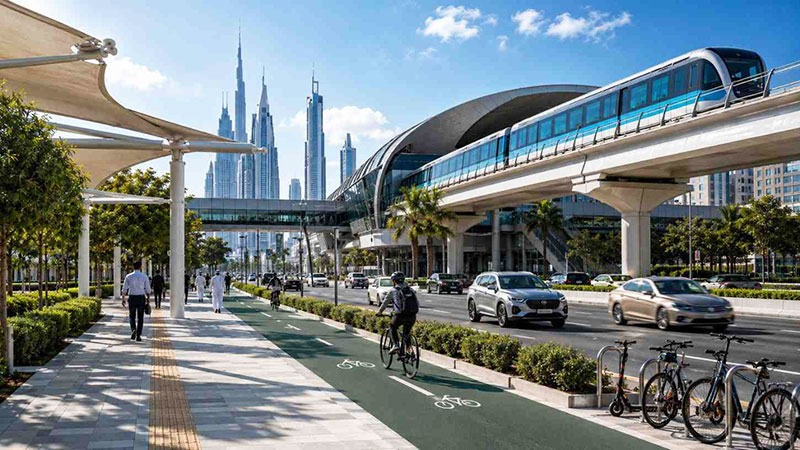
These plans include the development of road, metro, tram, bus, and marine transport networks, as well as first- and last-mile solutions, pedestrian routes, cycling tracks, and intelligent traffic systems.
Through these projects, the authority aims to make travel easier for residents and visitors, improve the efficiency of Dubai’s transport network, and maximize the use of existing infrastructure in a way that supports quality of life and strengthens Dubai’s position in smart and sustainable transportation.