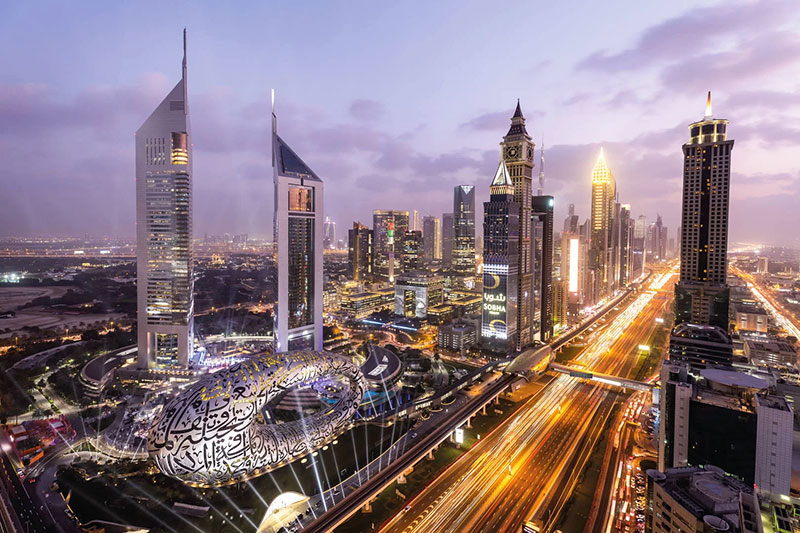
Dubai has secured second place globally in the Best Skylines 2026 ranking, according to a report issued by Radical Storage. The result adds to the emirate’s growing presence among the world’s leading urban and architectural destinations.
Dubai scored 6.9 points out of 10 in the ranking, coming behind China’s Shenzhen, which topped the list with 7.1 points. Hong Kong ranked third with 6.7 points. With this result, Dubai advanced ahead of several major global cities known for their distinctive skylines, including New York, Tokyo, and Kuala Lumpur.
The strong performance reflects Dubai’s wide range of skyscrapers and its remarkable urban density. According to the report, the emirate is home to 430 buildings taller than 150 metres, including 129 buildings exceeding 200 metres and 32 towers rising above 300 metres. These figures highlight the scale of urban development the city has achieved.
Dubai also recorded the highest average height for the ten tallest buildings among the top ten cities in the ranking, with an average of 1,725 feet. This indicator was one of the key factors supporting the emirate’s position, along with its strong results in the nighttime skyline visibility category.
The presence of nine award-winning architectural buildings also helped strengthen Dubai’s standing in the ranking. The report indicated that design quality and architectural innovation were important elements in evaluating cities, not only the number or height of their towers.
The ranking was based on an assessment of the world’s 100 largest cities using several weighted indicators. These included the number of skyscrapers taller than 150 metres, the average height of the ten tallest buildings, tower density, nighttime skyline visibility, and the number of buildings that have received architectural awards.
The report noted that these criteria offer a broader view of urban development and the quality of city planning. They also help measure a city’s ability to provide an integrated urban scene that appeals to residents, visitors, and investors.
Shenzhen topped the global ranking thanks to its 679 skyscrapers exceeding 150 metres in height. Hong Kong maintained its place among the top three due to the density of its towers and the cohesion of its skyline.