Her Excellency Dr. Amna bint Abdullah Al Dahak, Minister of Climate Change and Environment, affirmed that recent geopolitical events have demonstrated the success of the proactive approach adopted by the United Arab Emirates in managing food security. She noted that the country maintained stable markets and ensured the normal availability of food products despite disruptions affecting regional and global supply chains.
During her appearance on the “Future” podcast in an episode titled “The UAE’s Environmental and Climate Readiness for the Future,” she explained that this success was not the result of temporary measures introduced in response to current circumstances. Instead, it was the outcome of a long-term vision and proactive plans implemented by the country over the past several years. These efforts have proven effective in strengthening readiness and stability, particularly in sectors directly connected to people’s daily lives.
This approach reflects the UAE’s ability to anticipate challenges and prepare for them before they arise. The country has developed a flexible food system and strengthened policies related to production, imports, storage, and distribution, ensuring that essential goods continue to reach local markets efficiently.
Diversifying Food Sources
She said the UAE began early in building a resilient food security system by diversifying import sources and expanding economic partnerships with countries around the world. This has provided a wider range of food supply options, reduced reliance on specific markets, and increased the country’s ability to respond efficiently to global changes.
This direction has strengthened the flexibility of the local market and given the UAE a broader range of alternatives when dealing with challenges that may affect international trade, transportation, or supply routes.
She added that the UAE Food Security Strategy 2051 serves as the main framework for developing an integrated system aimed at placing the country first globally in the Food Security Index. The strategy is built around several key pillars, including diversifying import sources, maintaining strategic reserves of essential goods, strengthening national production, and increasing its contribution to meeting local market demand.
The strategy is designed to establish sustainable food security that goes beyond addressing immediate needs. It also seeks to improve the efficiency of the food and agriculture sectors and strengthen their ability to grow and adapt to future changes.
She noted that crises also create opportunities for development, explaining that recent circumstances have increased consumer awareness of the importance of local products and encouraged greater support for them. This has contributed to the growth of the agricultural sector and strengthened its economic role.
Supporting Local Production
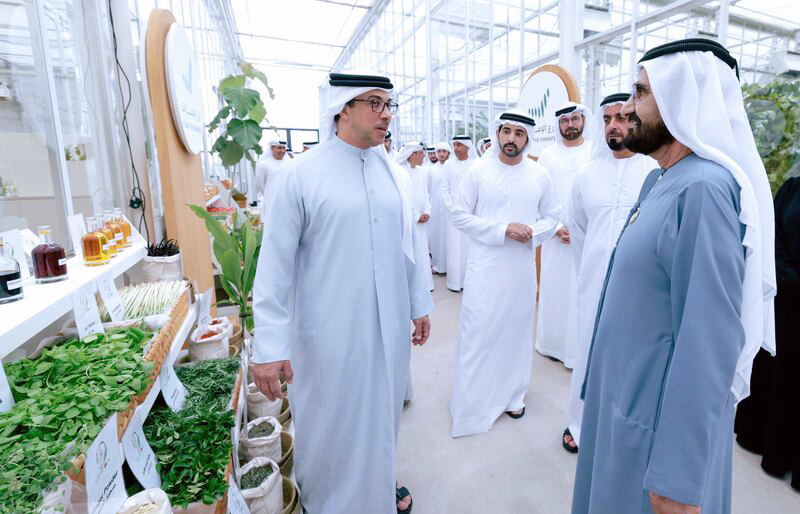
She pointed out that retail outlets and cooperative societies are giving greater attention to local agricultural products. Meanwhile, the National Agricultural Center continues to support farmers by helping market their products and connecting them with buyers.
These efforts include the opening of the first agricultural crop collection center outside the Emirate of Abu Dhabi in the Al Hamraniyah area of Ras Al Khaimah, in cooperation with Silal.
Expanding crop collection centers helps agricultural products reach markets more efficiently. It also supports farmers in marketing and distribution while reducing the time and effort required to transport products to retail outlets.
She affirmed that the ministry is working to increase the presence of local farmers’ products in retail stores by connecting farmers directly with retail companies and providing sustainable marketing opportunities. She stressed that food security has become a shared national responsibility involving government entities and the private sector.
This cooperation strengthens the competitiveness of local products and gives farmers broader opportunities to market their crops through stable and organized channels. It also supports the continuity of agricultural activity and increases the sector’s contribution to the national economy.
She added that developing agricultural supply chains is essential to improving the efficiency of local production. This includes shortening the time between the farm and retail shelves, maintaining product quality, extending shelf life, and ensuring that products reach consumers at reasonable prices.
Improving transportation, storage, and distribution operations also reduces waste, preserves crop quality, and ensures that products reach consumers in good condition. This supports the sustainability of local production and strengthens public confidence in national products.
An Integrated Agricultural System
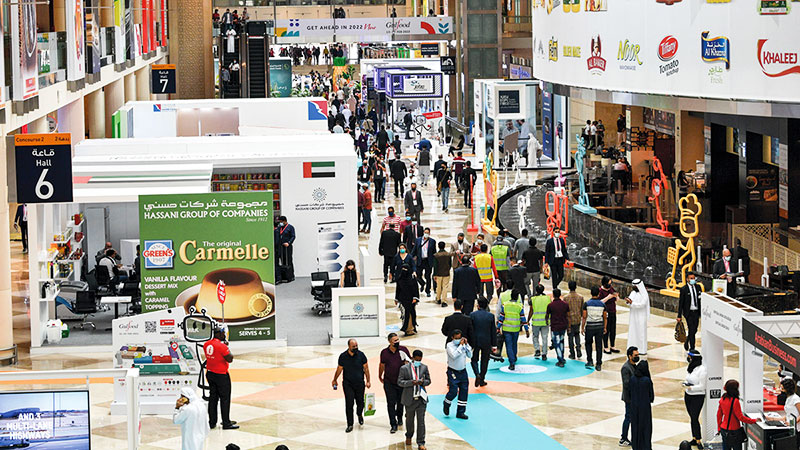
She explained that the Emirates Agriculture Conference and Exhibition serves as a platform that brings together different participants across the agricultural system, including farmers, marketing companies, investors, financial institutions, and startups. The goal is to build new partnerships that support the continued development of the agricultural sector.
The platform creates opportunities for cooperation and knowledge exchange. It also connects agricultural entrepreneurs with investors, technology providers, logistics companies, and financial institutions.
She affirmed that modern agriculture is no longer limited to crop production. It has become an integrated system that includes agricultural technology, production inputs, financing, logistics, and innovation.
She also pointed to plans to increase the participation of students and members of the community in agriculture and to encourage the development of sustainable solutions that can be expanded internationally.
This transformation highlights the UAE’s commitment to building an agricultural sector based on knowledge and innovation. It also reflects the country’s efforts to use modern technologies to increase productivity, reduce water and energy consumption, and improve resource efficiency.
Greater participation by students and community members can help promote agricultural and sustainability awareness. It can also encourage younger generations to develop ideas and projects that support food security locally and may later become solutions that can be applied in other markets.
Economic Value
Addressing the circular economy, Her Excellency Dr. Amna Al Dahak affirmed that the UAE is among the leading countries in developing strategies and frameworks for sustainable production and consumption, viewing them as a central part of the green economy.
She explained that integrated waste management is one of the key pathways toward achieving climate neutrality goals because of its role in reducing emissions and improving resource efficiency.
She noted that the UAE has succeeded in turning waste from an environmental burden into an economic resource through recycling, reducing landfill use, and transforming waste into valuable materials.
These efforts reflect a clear commitment to keeping resources in use for as long as possible, reducing waste, and converting used materials into inputs that can be reintroduced into different economic and industrial sectors.
She pointed out that the Warsan Waste-to-Energy Center in Dubai is one of the world’s leading projects in this field. It has the capacity to process approximately two million tons of municipal waste each year and generate enough electricity to power around 130,000 residential units.
The project demonstrates the UAE’s ability to combine sustainable waste management with energy production, reducing dependence on landfills and limiting the environmental impact of waste.
She added that the Emirate of Sharjah has established an advanced waste management model by diverting approximately 90% of its waste away from landfills through recycling and waste-to-energy processes.
Meanwhile, Tadweer Group in Abu Dhabi is developing specialized facilities to process and recover recyclable materials and return them to the economic cycle.
Circular Economy
She said the Ministry of Climate Change and Environment, in cooperation with BEEAH, launched the “Tahweel” platform as the first national digital platform for trading recyclable materials.
The platform aims to connect producers of recyclable materials with potential users, transforming waste into new economic opportunities.
It also facilitates access to recyclable materials and links organizations that have these materials with companies and facilities capable of using them. This supports greater material circulation and reduces disposal through unsustainable methods.
She also reviewed the Extended Producer Responsibility initiative, which expands the producer’s responsibility to include the post-consumption stage. This helps ensure that products are recovered, recycled, and returned to the economic cycle.
The initiative encourages companies to develop more sustainable products and consider every stage of a product’s life cycle, from manufacturing to collection and recycling after use.
She also discussed the “Naseej” initiative launched by His Highness Sheikh Mohamed bin Zayed Al Nahyan, President of the UAE, may God protect him. The initiative focuses on recycling textile waste and transforming it into reusable resources, supporting circular economy principles and reducing waste.
The initiative creates opportunities to benefit from textile waste rather than disposing of it. It promotes reuse and recycling while supporting the development of new materials and products with economic value.
She affirmed that sustainability is not limited to recycling alone. It also includes reusing materials and maximizing their value in ways that preserve natural resources while creating new economic and investment opportunities.
Deep-Rooted Sustainability
Her Excellency Dr. Amna Al Dahak affirmed that these initiatives reflect an integrated model of cooperation between government entities and the private sector. She noted that sustainability has been an essential part of the UAE’s identity and development approach since the country’s establishment.
This model can be seen in the growing number of projects that combine innovation, investment, and environmental protection while supporting economic growth and improving resource efficiency.
She said the UAE’s interest in environmental and climate issues is not a recent development. Rather, it is an extension of a long-standing awareness of the importance of preserving natural resources.
She recalled the participation of the late Sheikh Zayed bin Sultan Al Nahyan, may his soul rest in peace, in an international environmental conference only a few months after the establishment of the Union. His participation reflected his early vision of the importance of environmental protection and sustainability.
That vision established a national approach that placed environmental protection and responsible resource development at the heart of the country’s development journey. It also strengthened a shared sense of responsibility toward future generations.
She stressed that the UAE’s success in environmental and climate action is based on achieving a balance between economic growth, the preservation of natural resources, environmental protection, and biodiversity conservation.
She affirmed that this balance lies at the heart of the sustainable development model adopted by the country.
The UAE’s achievements in food security, agriculture, and the circular economy demonstrate that proactive planning and long-term vision provide a strong foundation for a more flexible and sustainable development system.
Through this approach, the country continues to strengthen its ability to confront challenges, turn them into opportunities for growth and innovation, protect natural resources, and build a more secure future for generations to come.