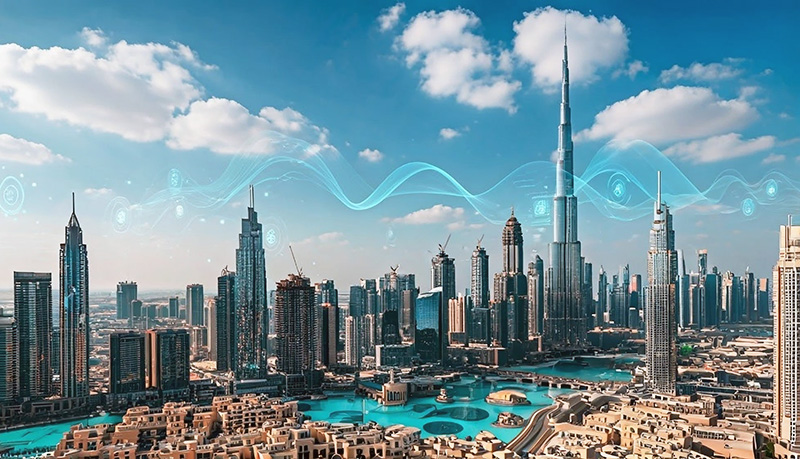
Dubai has further strengthened its position among the world’s most advanced cities after ranking second globally in the Smart Cities Index issued by Boston Consulting Group, which covered 61 cities across 39 countries.
The achievement reflects the emirate’s leadership in adopting advanced technologies and artificial intelligence. It also highlights Dubai’s success in using technology to improve quality of life, enhance government services, facilitate business activity, and strengthen economic competitiveness.
The ranking confirms Dubai’s progress in building a human-centered digital city based on innovative and sustainable solutions that anticipate the future and transform advanced technologies into services that make a tangible difference in the lives of residents and the business community.
The index, issued by Boston Consulting Group for the first time, is one of the global benchmarks used to measure how mature cities are in deploying digital technologies and artificial intelligence to achieve practical and measurable outcomes.
The assessment covered 61 major cities worldwide and was based on five main pillars: outcomes, strategy, adoption, ways of working, and enablers. It also included 35 sub-indicators covering 14 areas of digital transformation.
The index provides a comprehensive assessment of cities’ ability to use technology to support sustainable development, improve services, strengthen future readiness, and enhance global competitiveness.
Dubai Leads in Adopting Smart Solutions
The report showed that Dubai ranked among the world’s leading cities in adopting artificial intelligence technologies and smart city solutions, with this area recording one of the highest performance levels across the index’s main pillars.
This progress is the result of the continued expansion of artificial intelligence applications and smart digital services across various sectors, alongside the development of an integrated digital infrastructure that supports faster, more efficient, and more accessible services.
Dubai’s advanced level of adoption of artificial intelligence technologies and smart city solutions helped the emirate achieve one of the highest levels of digital maturity among the cities covered by the report.
This performance also confirms the success of Dubai’s approach in transforming technology into practical solutions and advanced services that have a direct impact on people’s lives, support businesses, and create new opportunities for growth and innovation.
Artificial Intelligence as a Strategic Choice
On this occasion, His Excellency Hamad Obaid Al Mansoori, Director General of Digital Dubai, said: “This advanced global ranking reflects the success of the vision of our wise leadership, which has made digital transformation and artificial intelligence a strategic choice for building a more efficient government and a city that is more prepared for the future. What Dubai has achieved today is not the result of separate projects, but rather the outcome of an integrated digital ecosystem built on data, shared digital infrastructure, and partnerships among government entities and across all sectors. This enables advanced technologies to be transformed into services and solutions that create a tangible impact on people’s lives and enhance the competitiveness of the economy.”
His Excellency added: “In Dubai, we view artificial intelligence as a means to improve quality of life, simplify services, and empower the economy, rather than merely as an emerging technology. We will therefore continue investing in the development of shared digital infrastructure and expanding the use of data and artificial intelligence across different sectors, further strengthening Dubai’s position as a global model for building the cities of the future.”
For his part, His Excellency Khalfan Juma Belhoul, Chief Executive Officer of the Dubai Future Foundation, said: “This ranking reflects the results of Dubai’s forward-looking approach, which is based on turning future technologies into practical applications that serve people and the economy. Leadership in artificial intelligence is not measured by the number of technologies adopted, but by their ability to create a real impact on people’s lives, improve productivity, and open new opportunities for growth and innovation.”
His Excellency added: “Dubai continues its journey toward establishing a global model for anticipating the future by building an integrated ecosystem that brings together innovation, research and development, flexible legislation, and effective partnerships. This accelerates the adoption of artificial intelligence across various sectors and enhances the city’s readiness to capitalize on future opportunities and create new models for sustainable development.”
The report showed that cities that integrate artificial intelligence into the core of their services and operations achieve faster and more sustainable results in improving quality of life and increasing service efficiency.
It also noted that cities leading in artificial intelligence adoption have a greater number of practical use cases and record higher levels of resident satisfaction. This reflects the growing shift toward making artificial intelligence a central part of cities’ operating infrastructure rather than treating it merely as a supporting technology.
The report also found a close link between the frequent use of generative artificial intelligence tools and higher levels of public trust in these technologies, as well as a more positive view of their future role.
It further noted that several cities in the Middle East, including Dubai, have recorded high levels of enthusiasm for artificial intelligence applications and their potential to improve daily life, develop services, and increase productivity.
Dubai’s second-place global ranking confirms the continued success of its efforts to build an advanced smart city model based on innovation, data, and artificial intelligence, while placing people and quality of life at the center of digital transformation.
The achievement also reflects the emirate’s ability to continue shaping the future, develop more efficient and flexible services, and strengthen its position as a global destination for technology, innovation, and sustainable development.