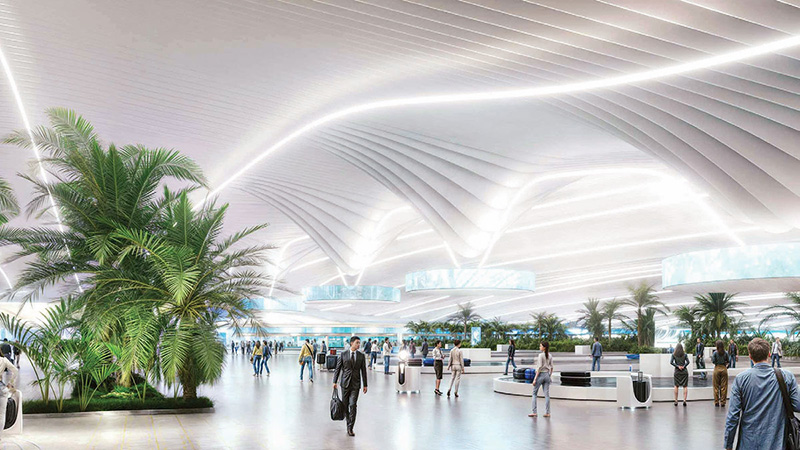
Dubai is preparing for the opening of the first phase of Al Maktoum International Airport in 2032 by testing a number of future technologies and solutions at Dubai International Airport years in advance, allowing these systems to be refined and improved in a real operating environment before they are transferred to the new airport.
The move comes as the Al Maktoum International Airport development project enters a new stage of large-scale construction, alongside preparations to award contract packages with a total value exceeding AED 55 billion during the current year. Work continues in line with the target schedule for the first phase to begin operations in 2032.
Al Maktoum International Airport Moves Into Large-Scale Execution
Majed Al Joker, Chief Operating Officer at Dubai Airports, said, “The Al Maktoum Airport project has moved from a vision to the execution stage on a broader scale,” noting that work is underway to award contracts during the current year with a total value exceeding AED 55 billion, part of which has already been announced.
Al Joker added, “The scale of the project reveals an unprecedented level of construction activity, with the number of workers on site expected to reach around 120,000 when construction activity reaches its peak.”
He confirmed that the project is progressing according to the schedule set for the first phase of the airport to be ready in 2032, while construction work and preparations for upcoming contract packages continue.
This stage reflects the size and importance of the project within Dubai’s long-term plans to expand its aviation capacity and prepare for future growth in passenger traffic and air cargo.
Artificial Intelligence to Simplify the Passenger Journey
Dubai Airports is placing increasing importance on technology and artificial intelligence as key tools for improving the passenger experience and simplifying operational processes.
Al Joker said, “The goal of using technology and artificial intelligence at Dubai Airports is to simplify, accelerate and facilitate the passenger experience, and to turn routine daily procedures into processes that are simpler and easier.”
He added that technology, for Dubai Airports, is not an end in itself, but rather a means of achieving a higher level of guest experience, noting that artificial intelligence and technology are already part of a large number of daily operations at Dubai International Airport.
Al Joker pointed out that the use of artificial intelligence has enabled airport operations to move from reaction to prediction.
He said, “The airport has a system that provides staff in the operations center with a comprehensive picture of various aspects of operations in real time, helping them understand what is happening at the airport and make quick and decisive decisions.”
This approach forms part of a broader strategy focused on using data and smart technologies to improve operational efficiency and deal with developments proactively rather than responding only after they occur.
Robotics Set to Play a Bigger Role at Al Maktoum International Airport
Modern technologies are expected to play a greater role at Al Maktoum International Airport, particularly as automation and robotic systems are expanded across a number of operations.
Al Joker explained that “modern technologies, and the latest advances in technology, will play a bigger role at Al Maktoum International Airport,” adding that robots and robotic systems will be used in a large number of operations, particularly baggage handling and ground operations.
The wider use of these solutions is expected to help improve operational efficiency and reduce the time required to complete a number of procedures, while also supporting a smoother and easier passenger experience.
Dubai International Becomes a Testing Ground for Future Technologies
Dubai Airports is not waiting for Al Maktoum International Airport to open before testing the technologies that will shape the future travel experience. Parts of these solutions are already being tested at Dubai International Airport.
Al Joker confirmed that “Dubai Airports is not waiting for the new airport to open in order to test the technologies that will shape the future travel experience,” noting that some of what is planned for implementation at Al Maktoum International Airport is already being tested in advance at Dubai International Airport.
He added that testing new technologies at Dubai International Airport before transferring them to the new airport is a fundamental part of preparations for the next phase, as it is not possible to wait until the new airport opens in 2032 to begin testing technologies and procedures.
He continued, “In this context, what is being implemented or tested at Dubai International Airport today represents part of building the future passenger experience at Al Maktoum International Airport.”
Al Joker explained, “When these technologies and solutions move into operation at Al Maktoum, they will already have undergone testing, evaluation and improvement in a real operating environment, instead of being tested for the first time when the new airport opens.”
This approach gives Dubai Airports the opportunity to test systems under real operating conditions, measure their effectiveness and address any challenges early, allowing them to reach a higher level of maturity and readiness before being deployed at the new airport.
Continued Investment in Dubai International Airport
Alongside the accelerating development of Al Maktoum International Airport, investment in Dubai International Airport will continue with the aim of improving services and increasing its capacity to handle more passengers.
Al Joker confirmed that investment in Dubai International Airport will continue, explaining that service development does not stop and that work is also underway to increase the airport’s capacity.
He added that Dubai International Airport’s current capacity is estimated at around 100 million passengers annually, noting that programs are underway to increase that figure to more than 120 million passengers through improved procedures, the use of technology and the development of existing infrastructure.
Al Joker said Dubai International Airport cannot stop improving its services, noting that investment is focused on two main areas: improving service and increasing capacity, allowing the airport to handle larger numbers of passengers before the transition to the new airport.
This approach will help maintain Dubai International Airport’s readiness and allow it to accommodate expected growth in passenger traffic over the coming years until the gradual transition to Al Maktoum International Airport begins.
A Parallel Strategy for the Future of Aviation in Dubai
The continued investment in Dubai International Airport alongside the development of Al Maktoum International Airport reflects a parallel strategy that combines improving current operational capacity with preparing for the next phase of growth in Dubai’s aviation sector.
Al Joker explained that continued investment in Dubai International Airport, alongside the accelerated development of Al Maktoum International Airport, reflects a strategy based on improving existing operational capacity while at the same time preparing infrastructure for the next phase of growth in Dubai’s aviation sector.
Through this approach, Dubai continues to improve the efficiency of its current airport while simultaneously building new infrastructure designed to handle significantly larger volumes of passenger and cargo traffic in the future.
Testing new technologies before the airport opens also gives the project an important operational advantage, allowing solutions to be transferred after they have already been evaluated and improved rather than beginning testing from scratch in 2032.
Al Maktoum International Airport Targets More Than 260 Million Passengers Annually
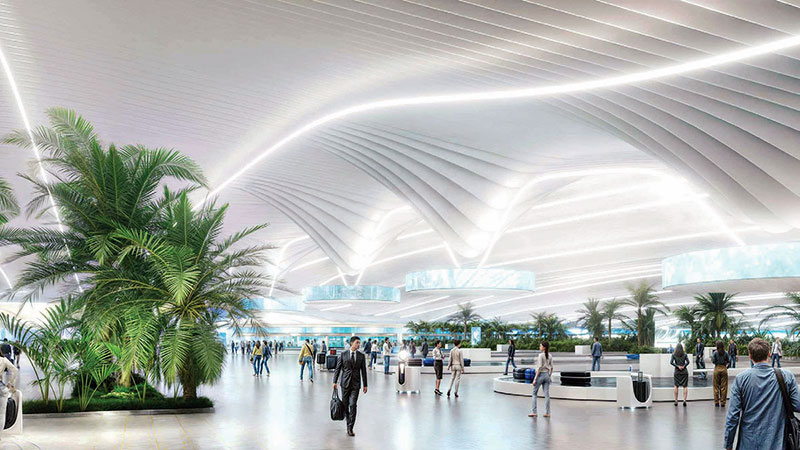
Al Maktoum International Airport is being developed to become the world’s largest aviation hub once all phases are completed, with an annual capacity of more than 260 million passengers and 12 million tons of air cargo.
The airport is set to include five parallel runways with independent operations, as well as two passenger terminals and seven concourses featuring more than 430 connected aircraft stands.
The project will also include a fully integrated automated passenger transport system, along with seamless multimodal connectivity covering air transport, rail and road networks.