The Dubai Future Foundation, in partnership with the World Economic Forum, announced the launch of the “Top 10 Emerging Technologies of 2026” report, which annually monitors a group of the most prominent modern technologies expected to play an influential role in shaping the future, supporting vital sectors, and providing new solutions to global challenges.
The announcement of the report coincided with the participation of the UAE delegation in the Annual Meeting of the New Champions, “Summer Davos,” hosted by the Chinese city of Dalian from June 23 to 25, with the attendance of a select group of officials, experts, business leaders, and decision-makers from around the world to discuss the most important economic, technological, and development issues.
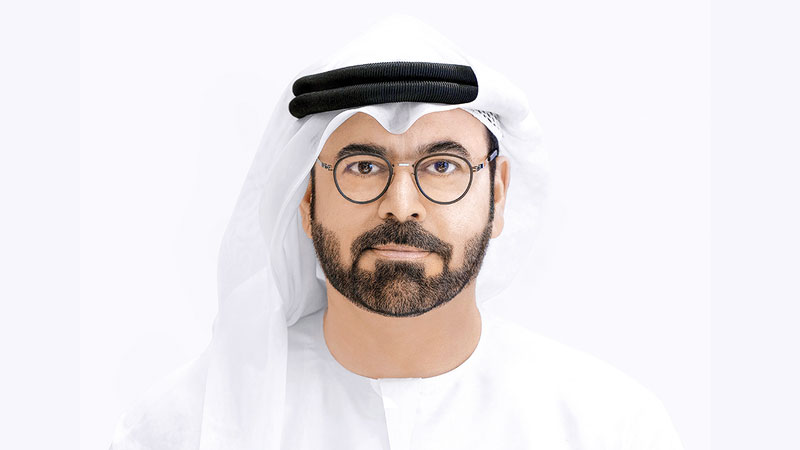
His Excellency Mohammed Abdullah Al Gergawi, Vice Chairman of the Board of Trustees and Managing Director of the Dubai Future Foundation and Chairman of the Museum of the Future, affirmed that international cooperation to keep pace with emerging technologies is a guarantee for strengthening the paths of human progress, achieving the desired positive impact of technology, and enabling governments and institutions to gain competitive advantages and build proactive capabilities that enhance their resilience in dealing with future changes.
He said: “The partnership between the Dubai Future Foundation and the World Economic Forum focuses on disseminating knowledge and accelerating the paths of innovation and technological progress, in a way that positively reflects on individuals and communities in vital sectors such as medicine, energy, food, health, and education. It also keeps pace with global developments, contributes to enhancing opportunities for development and prosperity, and accelerates the adoption of innovative solutions that serve communities and improve people’s quality of life.”
Mohammed Al Gergawi added: “Emerging technologies contribute to opening new horizons for development and progress, enabling governments to develop their services, raise their efficiency, and adopt more innovative and effective solutions. They also provide opportunities to address challenges and accelerate achievements in vital sectors, enhancing quality of life and benefiting communities around the world.”
For the second consecutive year, the Dubai Future Foundation is participating in the preparation of this report by contributing to the selection of the technologies presented, studying their expected impact, and analyzing the opportunities for their application and broader use in the future. The World Economic Forum’s research team also provided a comprehensive description of the current state of each technology, its development prospects, and the potential role it could play in reshaping a number of sectors.
The report reviews the first set of technologies related to enabling different objects, such as vehicles, homes, laboratories, institutions, infrastructure, farms, and open spaces, to take part in generating renewable energy. This concept relies on the use of artificial intelligence and the Internet of Things to manage the generated energy and regulate its flow into electricity grids, supporting a future model of “energy from everyone and for everyone.”
The second technology addresses the development of direct lithium extraction methods, lithium being a key element in electric energy storage batteries. This technology helps reduce the environmental impact associated with extraction operations and lowers water consumption and carbon emissions by relying on more sustainable methods, instead of traditional approaches based on drying water bodies and processing deposited salts.
The third technology focuses on advanced cooling materials, which can be used in semiconductors, computer boards, cloud and supercomputing servers, and data centers that support artificial intelligence applications. These materials help improve cooling capabilities and can also scatter a large percentage of sunlight before it turns into heat, thanks to microscopic air bubbles that act like mirrors at the level of light wavelengths.
The fourth technology highlights the removal of hard-to-degrade chemicals, particularly from drinking water and freshwater. This technology can support municipalities and water institutions in treating pollutants through several methods, including heating water to break down chemical molecules, passing contaminated water through specialized electrodes, or using ultraviolet light to stimulate precise energy pulses that help decompose chemical compounds.
In the fields of food and medicine, the fifth technology is precision fermentation, which offers new opportunities for manufacturing food and pharmaceuticals using advanced laboratory techniques. This technology is expected to support food security and contribute to developing more sustainable production systems that are better able to adapt to changes.
The sixth technology addresses more precise drug delivery inside the body through exosomes, which are extremely small extracellular vesicles. These vesicles help deliver medicines to their targets inside the body more effectively, which may improve treatment efficiency and accelerate the achievement of desired outcomes.
The seventh technology relates to messenger RNA vaccines designed to treat cancer. These vaccines aim to train the immune system to recognize and confront cancer cells, making it more prepared should the disease return in the future.
The eighth technology comes in the field of drug discovery using quantum simulation, where this technology can help researchers test promising drug formulations computationally before moving them to laboratories. This may contribute to accelerating research and development in the pharmaceutical industry and opening the door to more precise therapeutic solutions.
The report’s ninth technology focuses on developing world models for artificial intelligence that do not rely only on data written in natural language, but instead move toward directly analyzing natural phenomena, human activities, and operational and production processes. This trend represents an important step toward building artificial intelligence models that are more capable of understanding the world and dealing with its complexities.
The list concludes with the tenth technology: secure lattice-based encryption, designed to keep pace with the rapid development of quantum computing and artificial intelligence. This technology works by hiding data within complex mathematical and geometric structures, while adding intentional noise that makes decryption more difficult, even when using advanced quantum computers.